




Showing posts with label Sex Ratio. Show all posts

Saturday, March 13, 2010

Evolving from Promiscuity to Monogamy

New research has revealed how the process of evolution can result in sexually promiscuous animals undergoing adaptation for monogamy.


Reproduction is an expensive endeavor. Tremendous time and resources are invested in seeking-out healthy partners, in consummating relationships, and in rearing the resultant offspring. Luckily, evolution has resulted in life being programmed to strive for resource efficiency; to work towards maximum reproductive benefit at minimum personal expense. In regards to pair-bonding between the sexes, this biological imperative for reproductive economy has made promiscuity the rule and monogamy the exception. However, despite the fact that promiscuous mating systems are the prevailing strategy in nature, environmental factors can push typically promiscuous species towards monogamy.

As a case in point, a report published in the April issue of The American Naturalist details how the ‘mimic poison dart frog’ (Ranitomeya imitator) parted ways with promiscuity to adapt a lifestyle as the first scientifically recognized genetically monogamous amphibian.

Like other frog species, poison dart frogs incur a certain amount of risk by laying their eggs in water. Although water is a biological prerequisite for frog survival, ponds, lakes and puddles also house predatory fish and other animals that prey on vulnerable eggs and tadpoles. During its evolutionary past, the menace of predation pushed the mimic poison dart frogs away from larger, riskier ponds to the considerably smaller, but safer, pools held by leaves of large bromeliad plants. Unfortunately, although the tree-top bromeliads decreased the rate of frog young predation, the movement from the big ponds raised a separate issue – nutrient limitation.

The big ponds definitely had more predators; but, they also had substantially more food. In fact, the ponds had so much food that a single frog-parent (in this case the male) was able to handle the tadpoles all by himself – a single parent family arrangement was all that was necessary to raise the next generation. In contrast, the waters held by the bromeliads averaged only about 24 milliliters in volume, far too little to hold ample provisions for a startup tadpole. In order to maintain their newly acquired safe housing, the mimic dart frogs had to adapt a new tactic.

Male mimic dart frogs had previously evolved the capacity to both transport and guard young tadpoles, but having moved to the suburbs, the females needed to help-out with feeding; rearing had become too difficult a task for the males to handle on their own. If they were to ensure the survival of their young, the days of leaving dad to care for the kids were over – monogamy was the best option. Unlike males, female mimic darts have the ability to produce eggs. To do their part, mom frogs adopted a strategy called trophic egg feeding, a practice in which they lay unfertilized eggs in the bromeliad pools for the tadpoles to eat.

An absolutely amazing video of this monogamous behavior was recorded by the BBC during the dissertation work of Jason Brown. Jason was the lead author of the cited paper, and the mimic dart footage was included in the David Attenborough narrated documentary “Life in Cold Blood.”

This is awesome footage:


Brown, J., Morales, V., & Summers, K. (2010). A Key Ecological Trait Drove the Evolution of Biparental Care and Monogamy in an Amphibian The American Naturalist, 175 (4), 436-446 DOI: 10.1086/650727

Wednesday, December 23, 2009

Twisted Penises, Convoluted Vaginas and Really Ducked-up Sex

Wow, I really had a tough time coming-up with a title for this post! There were so many possibilities…

In the December 23rd edition of the journal of the Proceedings of the Royal Society B, several scientists from Yale University detailed their recent experiments into the coevolution of male and female duck genitalia. Specifically, the researchers wanted to evaluate whether or not the physical morphologies exhibited by duck penises and duck vaginas provided evidence of ducks being actively engaged in a sexually antagonistic ‘arms race.’ In hopes of resolving this reproductive riddle, the folks from Yale traveled to a commercial duck farm in California, while equipped with artificial duck vaginas, mineral oil and a high speed video camera.

Sexual conflict arises when the strategies used to optimize reproductive fitness differ between the males and females of a species. In the case of muscovy ducks, like those used in the Yale research, the strategy of the male is to mate as frequently as possible, and with as many different females as he can find – even if sexual coercion is the only means available to achieve these goals. Conversely, the strategy of the female is to select only the healthiest of males as reproductive partners and to outright reject all those deemed unworthy. Because the male and female strategies are in conflict – quantity vs. quality - both sexes have undergone adaptations to out-maneuver the opposite gender. In this back-and-forth battle for reproductive victory the process of sexual selection has discovered an affective tactic - to change the physical shape of the duck’s genitalia.

In addition to being one of the few birds with a penis at all, the phallus of the male muscovy duck is physiologically and morphologically very unique. Unlike the penises of most mammals, which when erect are hydraulically rigid and supported by axial-orthogonal layers of inextensible collagen fibers, the penis of the muscovy has an arrangement of supportive fibers that allow for complete flexibility while erect. Besides being highly limber, the shape of the muscovy’s twenty centimeter long penis is ‘twisted’ forming a distinctive counter-clockwise spiral. These functional traits allow the male to very quickly insert into the female during copulation.

The speed at which copulation occurs is of vital importance to the male, it gives him the ability to inseminate even those females that actively defy his advance. Physical resistance is minimized because the male can insert his penis at a speed of about 1.6 meters per second and complete insemination in just 0.36 seconds – that doesn’t leave much time for fighting. Since the male’s seemingly invincible swiftness eliminates combat as a pragmatic brood planning option, the female line has employed an anatomical counter adaptation to ensure its continued mate choice.

As a defensive escalation in the muscovy’s inter-sexual arms race, the female has undergone adaptation for a counter armament – she’s changed the shape of her vagina. The female duck’s vagina can be found to exist in one of two possible shapes, either with a 135-degree bend, or with a clockwise ‘twist.’ During forced copulations, the morphology of the vagina functionally prevents the male’s penis, or his sperm, from entering sufficiently far into the reproductive tract to result in fertilization. However, when the female muscovy is receptive to a male suitor – when SHE chooses a mate – she actively facilitates the sexual congress by taking on a body posture with an elevated tail. The elevated tail, in combination with muscular contractions, permits the male duck to penetrate further into the reproductive tract and thus improves the likelihood of successful fertilization.

To uncover the fascinating story of co-evolving duck genitalia, the researchers from Yale presented aroused males with replicated duck vaginas. In conducting the experiment, female ducks were placed in a cage with a male, once the male initiated a mounting behavior, the female was quickly removed and the male was filmed with a high speed video camera as he inserted his penis into one of four different shaped molded test-tubes. The mineral oil covered test-tubes either had a straight shape, mimicked the male’s penis with a counterclockwise twist, or they had a female-like clockwise twist or 135-degree bend. After analyzing the film, the scientists discovered that the replicated vaginas that matched the shape and dimensions of real-life female muscovies effectively blocked the male’s penis from reaching very far into the test-tube.


Patricia L. R. Brennan, Christopher J. Clark and Richard O. Prum (2009). Explosive eversion and functional morphology of the duck penis supports sexual conflict in waterfowl genitalia Proc. R. Soc. B

Wednesday, November 25, 2009

Sex was a Costly Affair for Ceratopsian Dinosaurs

In a recent article published in The Anatomical Record several scientists, including Florida State University’s resident dino-osteologist Gregory Erickson, constructed a life table for a population of 80 bird-hipped dinosaurs.

Note, a ‘life table’ is a common tool used by population ecologists/biologists to interpret the birth-to-death maturation cycle of an organism. Essentially, a life table can be thought of as a listing of a population’s members with a corresponding age identified for each individual. Through examination of how the table’s age-ranges are distributed scientists can make inferences regarding the population’s ecology.

Drawing reliable conclusions on the subject of population-level processes can be difficult, particularly when that population happens to be extinct and is only known from the fossil record. Without numerous, quantitatively significant, representatives from a population, discussions of maturation rates, reproductive cycles and mortality rates are all but impossible. However, a mass kill event documented in the Lujiatun Bed of the Lower Cretaceous (Yixian Formation, Liaoning Province of China) provided the Erickson led team with the rare opportunity to do just that, study the demography of an extinct population of dinosaurs – specifically the species Psittacosaurus lujiatunensis.

Compared to the ‘lizard-hipped’ dinosaurs (saurischians) relatively little research has been undertaken in understanding the life history and population dynamics of the Ornithischia (bird-hipped), this makes the case of P. lujiatunensis all the more significant. Through histological analysis of the growth rings found within the fossil bones of the ceratopsians, – analogous to counting the growth rings in a tree – Erickson was able to estimate the age of each population member; the frequency of the age-ranges were then correlated to body size estimates. The result was that, like modern birds and mammals of comparable size, the life history of Psittacosaurus lujiatunensis reflected a pattern in which

“[h]igh attrition in young individuals gives way to lower stabilized values once a threshold size is obtained; however, later in ontogeny mortality rates increase (typically from the effects of senescence) leading to the extinction of the cohort.”

In other words, risk of death was found to be at its greatest when the dinosaurs were young and small – possibly because of vulnerability to predation. Once achieving a certain size and becoming less vulnerable, mortality rates decreased. Mortality risks would then increase again as the dinosaurs got old; through the natural ageing process the senior members of the population would once again become vulnerable to predators, disease, and etcetera.

In addition to the vulnerable young and old members of the Psittacosaurus lujiatunensis population, incidences of increased mortality were also found for those ceratopsians around the age-range associated with reaching sexual maturity. In this case, energy and resources devoted to the pursuit and winning of mates, as well as the rearing of young once a mate was found, likely conspired to cause escalated mortality levels during the reproductive years.


Erickson, G., Makovicky, P., Inouye, B., Zhou, C., & Gao, K (2009). Initial Insights Into Ornithischian Dinosaur Population Biology
The Anatomical Record, 292 (9), 1514-1521

Wednesday, May 27, 2009

Two’s a Company, Three’s a Sexual Conflict

ResearchBlogging.org Imposition of an established pair-bond by a combative third party leads to an antagonistic love triangle and homosexuality in one vulture population.

Weighing as much as fifteen pounds and sporting a wingspan greater than nine-feet in length, the Bearded Vulture (Gypaetus barbatus) is a massive bird. First described by Linnaeus in his Systema Naturae, it’s found throughout Eurasia and Africa where it nests at mountainous elevations beyond 1300 feet. Although becoming rarer within most of its natural European range, the huge bird is experiencing population growth and overcrowding in the Pyrenees and as a result has opted for co-occupancy with rival males.

Within un-crowded habitats, single male Bearded Vultures stake claim to territories and take-up with female members of the species; however with the population growth currently experienced in the Pyrenees, there just isn’t enough available habitat for free roaming males to settle down and raise families of their own. Having little other option, the roving males are beginning to invade the established territories of attached rivals where they move-in with the conventional male-female pair. The resulting trio of vultures, consisting of two males and one female, is leading to disharmony between the established pair-bond and is diminishing their reproductive success.

Typical Bearded Vulture male-female pairs breed between December and February and produce one or two eggs, but with the addition of the second male in the territory, the frequency of copulations is decreasing. This is happening for a couple of reasons. Firstly, the males are constantly fighting each other for access to the female. With time and energy being invested in combat and deterrence of rivals, the males simply don’t have the time or energy to get romantic. Exasperating this situation even further, when one male does find an opportunity to copulate with the female, the rival male will often physically interrupt the act and stop them mid-coitus!

In addition to the obvious and expected interlude brought on by the intrusion of a combative third party in sexual congress, the female is often put-off by the mere presence of a second male and will terminate copulation independently of any physical altercation.

Fortunately, there is hope for the Pyrenees populations. As with the cliché, “time heals all wounds,” it turns-out that over long enough periods, the polyandrous model can work for the Bearded Vulture. Key to success in the multi-male regime is a habitat of sufficient quality to sustain additional numbers and the willingness of the beta bird – usually the previously roving male – to demonstrate submission to the resident alpha through male-male copulations, which appear to curtail the aggression of the alpha.


Bertran, J., Margalida, A., & Arroyo, B. (2009). Agonistic Behaviour and Sexual Conflict in Atypical Reproductive Groups: The Case of Bearded Vulture Polyandrous Trios
Ethology, 115 (5), 429-438 DOI: 10.1111/j.1439-0310.2009.01628.x

Sunday, May 17, 2009

Size Matters, But So Does Maturity

Starting in the 1940’s, Angelo Siciliano pioneered the cultural meme of “brawn over brains” and actively encouraged the males of one mammalian species - Homo sapiens - to pack on muscle in order to win over rivals for the affection of potential mates. However, lost to Charles Atlas was the possibility that the iconic “97-pound weakling,” which he vowed to aid through a rigorous program of dynamic-tension, may have been capable of achieving success on his own, independently of an increased body size. Key to such success would be to avoid the gauntlet of bullying sand-kickers altogether thereby reducing the necessity for brute force, and rather than investing in mail order fitness regimens, to instead turn the “chump to a champ” through allotting resources to two key areas - growing-up fast and getting to the female first!


Thanks to the vector of modern media, Angelo’s meme is still infectious today (among populations of H. sapiens) and has probably met with some limited success; however there are several species that have found competitive advantage in strategies other that those associated with an increased body size – one such animal is the redback spider of Australia.

The redback, Latrodectus hasselti, is a polyandrous species in which intrasexual selection relies less on choosey females and more on males competing for access to un-mated –“virgin” - females. Virgins are preferred by the male redbacks because, as with many other spiders, the males introduce a post copulatory plug to the female following sex, this has the effect of decreasing the likelihood of secondary male suitors successfully transferring genetic material – to have the best probability of forwarding their germ line to future generations, male redbacks seek out virgins. The virgin status of redbacks is identified by the males through a pheromone signal emitted by the female; within hours of mating, these chemo-signals cease being produced and the female becomes less attractive as a potential mate.


Typically, sexually mature males of the species, having converged on the virginal pheromone, will find themselves geographically amassed at the female’s web with as many as five other males vying for mating access. When this occurs, the males combatively engage each other until a single victor remains. To the victor goes the mate.

When it comes down to brute force, generally the male with the best weapons, most strength or greatest mass has the advantage in combat. This polyandrous scenario is familiar to most, but generally images of big horn sheep ramming each other, or gladiatorial deer with interlocked antlers are called to mind; the spiders are little different… Little different - except for an alternative intrasexual strategy to which some males find themselves better adapted.

By way of sexual and natural selection, some male redbacks have decided that because of the dynamic between pheromone signaling, male-to-male competition and copulatory plugs, that it may be better to focus more on being the first to achieve sexual maturity via rapid development than to spend extra effort and time in growing to a larger size. In this way they would have first access to females, avoid web-sparring with males and because of the pheromones, even discourage rivals post copulation. Even Charles Atlas could respect that!


KASUMOVIC, M., & ANDRADE, M. (2009). A change in competitive context reverses sexual selection on male size Journal of Evolutionary Biology, 22 (2), 324-333 DOI: 10.1111/j.1420-9101.2008.01648.x

Sunday, March 29, 2009

Ecosystem on a Log and Scarab Beetles - Field Photos

I wanted to share couple of interesting snapshots taken during the past week – well the snapshots themselves aren’t all that great, but what is depicted in them is pretty cool.

First, a section of an old log that now serving as a microcosm of biodiversity:


The fallen log is of the species Pinus elliottii (Slash Pine), as you can see from the photo, a new P. elliottii sapling has sprouted mid span. The sapling’s roots haven’t penetrated the base of the log and are fully contained within the rotting wood.

And if you take yet a slightly closer look,


You’ll notice that near the base of the sapling several other species of plants, grasses and mosses (including this week’s Wetland Plant of the Week - L. lucida) have made the log home. Though it’s difficult to see from the above images, there are also several ants, spiders and chiggers using the plants as habitat.

Using the fallen pine log for nutrients and structural support is interesting enough, but the story gets even better!

What is truly remarkable is that if you take a look to the right of the log in the first photo, you’ll notice a clearing of the foliage associated with a slight topographical depression. This depression actually functions as a waterway during periods of seasonal flooding!

Taking a look at the surrounding trees,


you’d find water stain lines more than a foot in elevation above the ground surface.

Considering that this entire site is less than five miles from the Gulf of Mexico and letting my imagination run a little wild (but not too much), I can easily envision a scenario in which such a log-microcosm serves as a platform in “rafting” plants and animals to far off places, thereby driving Natural Selection via a founding effect… It even has a ready made sail - the leaves of the pine sapling!

The other snapshot I felt deserved posting was a couple of Scarab Beetles (Family Scarabaeidae) battling for the privilege of rolling dung.


Being a still photo as opposed to a video, you may not be able to read the whole story in the above image, but what’s happening is that three "Tumblebugs" (Canthon spp.) are maneuvering a well-rounded ball of dung.

Male Scarab beetles proactively assist the females in collecting dung to be used for nest building. In exchange for help with rolling the dung balls back to the burrow, males may receive the opportunity to mate with the female, who will in turn lay a single egg on the dung ball.

Rolling the dung helps compact the material into a more stable base for larval development and at the same time provides a method for the most fit males to demonstrate their paternal skills in hopes of wining the affections of a potential mate.

In the picture above two males, both vying for an opportunity to mate, are attempting to impress the female – unfortunately for her, their back-and-forth rolling has landed her on her back under the ball of dung! She can just be made out under the upper left corner of the dung ball.

Sunday, February 8, 2009

Sexual Siblings: Socio-Ecological Reproductive Strategy

The previous posts (Post 1, Post 2 and Post 3) in this series on reproductive strategy touched on several fundamental concepts central to the study of sexual selection. One item discussed was the idea of sex ratios as drivers for gender role assignment in organisms that exist in populations of low density or are otherwise biased towards one sex or the other. For instance, recall from Post 2 that hermaphroditic organisms can choose to take on the reproductive function of either a male or a female dependent on the relative abundance of each in the surrounding environment. The availability of mates is critical in determining an organism’s ability to procreate and pass on genetic information, to this end sex ratios can be the deciding factor in achieving ultimate success at the level of the individual and that of the population.

Considering the significance of sex ratios (the number of available males compared to that of available females in a given population) there is little wonder why organisms take into account such gender proportions in conjunction with family planning prior to establishing a nest, clutch or natal patch. Simplistically, the idea is that if there is already an abundance of males in a population, it may be best to produce mostly female offspring as a means of optimizing chances for passing on genes to future generations. Similarly, if there is a surplus of females, the best strategy may be to produce male offspring in order to maximize that offspring’s chances for finding future reproductive mates.

NOTE: For the sake of clarity, most organisms do not literally engage in family planning per se, generally the decision to reproduce, and to what extant to do so, is a product of hereditary response to physical characteristics of local ecology and sociality – evolution. Nevertheless - for the purpose of this blog - reproductive planning can metaphorically be considered as an individual choice.

Of course this is a very rudimentary view of sex ratios and doesn’t take into account the differential expenses associated with producing gametes, seeking-out mates, rearing young or competing with sexual rivals; these investment considerations would greatly impact any ratios. But, in general if one were to weigh the total costs and benefits of producing offspring of either sex - in a given environment - the ratio of males to females - on average - would be one to one (1:1). However, as hinted above, there are several exceptions to this rule; one such exclusion being “local mate competition.”

Chiefly, local mate competition (LMC) proposes that under circumstances with tightly controlled sex ratios, limited out-breeding and where sexual rivals are likely to be close relatives, it is to the benefit of the mother to produce only enough males as is necessary to inseminate available females. Although LMC can be relevant in any location with limited dispersal of organisms, it is most easily understood in situations relating to inbreeding populations.

As a hypothetical example, if a female is to produce 10 offspring in any combination of male and female - and she knows in advance that it is highly likely that the offspring will inbreed with each other – it may be best to produce one male and nine females as opposed to maintaining a 1:1 sex ratio with five males and five females. Through this strategy, mate competition between rival males will be eliminated and nine females could potentially become mothers themselves thereby maximizing the total number of second generation offspring produced – ultimately, more genes are passed on to future generations.

Contrastingly, if the female were to forego the tenants of LMC and instead choose to maintain a 1:1 sex ratio, five brothers with parallel gene compliments would waste valuable energy trying to out-compete each other for access to the five available sisters. Regardless of which of the five males eventually succeeded, in the end only a maximum of five females could go on to reproduce as mothers.

Following this rationale, numerous arthropods, as well as several other organisms, exhibit the ability to selectively determine the sex ratios of their offspring; however, more than any other organism wasps serve as the classic example of LMC.

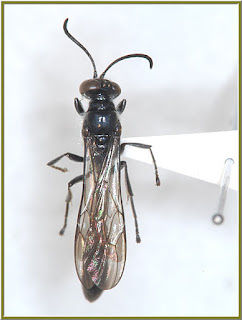
One wasp, Trypoxylon malaisei, constructs its nest in a very unique way. The female Trypoxylon malaisei lays eggs along the interior of its tube shaped trap-nest. Starting at the inner most point of the tube, the wasp inserts its ovipositor and lays an egg that is destined to become a daughter, next to this first egg a second daughter egg is deposited and then a third, fourth and so on, arranging the eggs along a single line side-by-side until reaching the exterior portion of the tube nest. Once at the end, the mother wasp will lay one or two final eggs which will become sons (male wasps). When the eggs hatch, the male offspring mates with its numerous female siblings - the sex ratio is perfectly designed (via evolution) to maximize insemination of the female offspring and to insure second generation fecundity.
[Trypoxylon malaisei]


Another wasp, the parasitoid Goniozus nephantidis utilizes a similar strategy when laying eggs within the integument of prey caterpillars. Typically, the wasp will inject approximately 18 eggs into its paralyzed host, of these only one or two are predestined to be male. On hatching and reaching sexual maturity all will inbreed - some even prior to exiting the comfortably nutritious host.

Through even greater levels of adaptation, driven by competition, other parasitoid wasps improve on the tactics of sex ratio exploitation. Using sensitive chemo-detection, these wasps seek out prey species, such as caterpillars, that are already serving as incubators with the eggs of a rival wasp. To these already occupied hosts the newly arrived expectant mother will inject only male eggs that on hatching devour the other male competitors and breed with the remaining females.

Other exceptions to the 1:1 sex ratio will be explored in later editions of the Socio-Ecological Reproductive Strategy series.


Ian C. W. Hardy, James M. Cook (1995). Brood sex ratio variance, developmental mortality and virginity in a gregarious parasitoid wasp Oecologia, 103 (2), 162-169 DOI: 10.1007/BF00329076

Ian C. W. Hardy, Paul J. Ode, Michael R. Strand (1993). Factors influencing brood sex ratios in polyembryonic Hymenoptera Oecologia, 93 (3), 343-348 DOI: 10.1007/BF00317876

Shintarou Oku, Takayoshi Nishida (2001). Presence of Single-Sex Broods Under Local Mate Competition in(Hymenoptera: Sphecidae): Adaptation or Maladaptation?Annals of the Entomological Society of America, 94 (4), 550-554 DOI: 10.1603/0013-8746(2001)094[0550:POSSBU]2.0.CO;2

John H. Werren, Giuseppina Simbolotti (1989). Combined effects of host quality and local mate competition on sex allocation inLariophagus distinguendus Evolutionary Ecology, 3 (3), 203-213 DOI: 10.1007/BF02270721