Showing posts with label Field Photos. Show all posts

Friday, March 23, 2012

Thorn Bugs in South Florida

Thorn bugs (Umbonia)

Photos taken at Estero Bay Preserve State Park two weeks


Monday, October 11, 2010

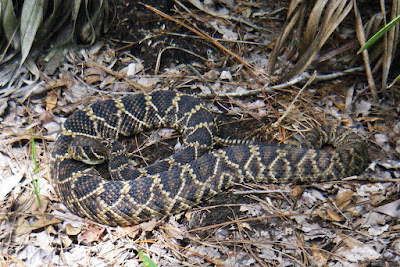
Field Photos: Eastern Coachwhip Snake

Masticophis flagellum flagellum - the eastern coachwhip
Photographed near Inglis, Florida two weeks back.


Monday, September 6, 2010

Field Photos: Fishing Spider in Nyssa Swamp

The fishing spider Dolomedes tenebrosus as found in a Nyssa swamp near Tallahassee, Florida.


Snapshots taken about a month ago.

Sunday, August 29, 2010

Field Photos: White-eyed Vireo in Nest

Vireo griseus the white-eyed vireo; nested in a forked branch of Myrica cerifera (wax myrtle).

Snapshot taken a couple months back in Manatee County, Florida – where vireos nest year around.

Monday, November 30, 2009

A Darkiling Beetle, a Wasp, a Fritillary and an Egret

Random photos from the field; taken last week just south of Tampa, Florida.

Possibly Isomira pulla ???

A species of the Sceliphron genus ???


A couple of Gulf Fritillaries; Agraulis vanillae


Great Egret; Casmerodius albus


Sunday, November 22, 2009

The Magnificent Urticating Slug Caterpillar

Found this little guy resting on my patio last night….


Euclea delphinii belongs to the Limacodidae Family of moths; it’s called the ‘slug caterpillar’ because of the sluggish way that it moves and its overall rounded appearance.

It also has stinging hairs (i.e. urticating).

Friday, November 20, 2009

The Tactics of an Egg Tending Lynx

While stomping through a northwest Florida flatwoods community earlier this week, I took pause to admire a couple of swamp sunflowers (Helianthus angustifolius). The sunflowers’ brilliant yellow display glared brightly through the otherwise dark and rainy Tuesday afternoon and beckoned for a closer look. On turning-over one of the composite flower heads to better examine its calyx, I discovered a green lynx spider (Peucetia viridans). The spider was standing guard on top of its egg sac, which it had tethered securely to the optimistic sunflower’s underside with hard-wearing silk.


The green lynx spider is a member of the Oxyopidae Family and accordingly displays several traits characteristic for the group. In terms of identifying morphology, members of the group show a hexagon-like pattern of eye arrangement, and legs that bear large spines. Behaviorally, members of the Oxyopidae are aggressive daytime hunters which, as opposed to constructing webs, stalk their prey over the leaves and stems of the herbaceous groundcover. In regards to Peucetia viridans specifically, the spider’s body is translucent and exhibits a bright green coloration with red spots on the cephalothorax and black spots on its spiny legs.


Considering the presence of an egg sac and the sentinel-like bearing demonstrated by the spider appended to the sunflower, it was very likely a female. As a strategy, females of the species uncompromisingly guard their reproductive investment using a variety of tactics. These protective measures are necessitated by the low-to-the-ground habitat they share with a number of other voracious predators. Here in Florida, some of the most abundant and hostile species encountered by lynx spiders are fire ants (Solenopsis spp.)


The specific tactic used to defend an egg sac from fire ant onslaught is dependent on the intensity of the ant attack. Intensity is here a measure of ant quantity and the frequency of assault. Generally, female lynx spiders will utilize a mode of defensive escalation in which infrequent or isolated attacks from a single ant will be dealt with through deployment of a rapid and violent head-on confrontation. As the ant approaches the female, she’ll pounce forward and use her mass to knock the assailant from the plant, or, if failing to physically remove the ant, she’ll alternatively utilize her fangs to pierce the exoskeleton of her antagonist, ultimately slaying the provoker. The spider will almost always prevail during one-on-one combat with an ant, however if the ant attack is undertaken in number, evasion becomes the best option for the lynx.

If the incidences of attack become too frequent, or if the ants attack in larger quantities, mother Peucetia viridans will attempt to dissuade the egg-seeking aggressors by removing the prize for which they hunger – she’ll move the eggs out of reach. Once again depending on the seriousness and intensity of the ants’ offensive maneuvers, she’ll execute one of two evasive actions. One option is to cut all but a couple of the silk cables holding the egg sac in place, causing it drop from its anchor point and remain suspended in air; the second option to completely untie the sac and relocate to an entirely new host plant. The suspension method removes the eggs from hostility and forces any persistent attackers to travel down individual threads to continue pursuit – where they’ll undoubtedly meet an agitated mother face-to-face. Relocating the egg sac to a new host is a sure-fire way to end the current dispute however it is a risky option, because increased visibility during transport may leave both the mother and her eggs vulnerable to other hungry predators.


Eubanks, M. (2001). Estimates of the Direct and Indirect Effects of Red Imported Fire Ants on Biological Control in Field Crops Biological Control, 21 (1), 35-43 DOI: 10.1006/bcon.2001.0923

Linda S. Fink (1987). Green Lynx Spider Egg Sacs: Sources of Mortality and the Function of Female Guarding (Araneae, Oxyopidae Journal of Arachnology, 15 (2), 231-239

Tuesday, November 17, 2009

A Gopher Tortoise in my Email...

Below are a couple of pictures emailed to me today by Lisa, a wildlife enthusiast and fellow Floridian. She took them this morning on her farm in central Florida.

I guess her horse had invited a neighbor over for breakfast..?


-Thanks Lisa, great shots!


Description:
The gopher tortoise, Gopherus polyphemus, is a large terrestrial turtle having forefeet well adapted for burrowing, and elephantine hind feet. The front legs have scales to protect the tortoise while burrowing. Body length averages approximately 25 cm (10 inches), with the shell ranging in height from 15 – 37 cm (6 – 15 inches). Body mass averages approximately 4 kg (9 pounds). Color is a dark brown to gray-black, with a yellow plastron (bottom shell). A gular projection is evident on the anterior...

You can find additional gopher tortoise info on the August 10th post - The Threatened Gopher Tortoise

Saturday, November 7, 2009

Field Photos: Snakes, Caterpillars, Orchids and Millipedes

I’ve been pretty tied-up the last couple of weeks, and as result the blog postings haven’t been very frequent…

As evidence to my continued existence, I thought that I’d post a few snapshots.

Hopefully, I’ll find time this weekend to put together some meatier content; until then here are a few critters that have been encountered during the previous two weeks:


Automeris io
The "Io Moth" Caterpillar

Yes, the spines can sting!
You can read more about caterpillars here - Papilio's Unconstrained Phenotypic Flexibility.


Sistrurus miliarius
The "Pygmy Rattlesnake"

As chance would have it, this one was photographed the day after my posting on pygmy rattlesnake venom.

Compare the picture here with the one featured in that posting - Venomous Fables and Phenotypic Variations at the Molecular Level.


Thamnophis sauritus nitae
The "Bluestripe Ribbon Snake"

Catching a little sun on a cypress tree's hummock this past Thursday. Poor image quality, but a beautiful snake.


Elaphe obsoleta spiloides
The "Gray Rat Snake"

His coloration and pattern is well camouflaged with the forest floor.


Spiranthes sp. ???
A orchid in the "ladies-tresses" group.

Haven't keyed this one out yet... I'm confident that it belongs to the genus Spiranthes, just not sure which one...

Compare it with Wetland Plant of The Week #16, Spiranthes praecox.


Sigmoria sp. ???
A "Millipede"

Not real good with millipede identification... I'd venture to guess that this one belongs to the Genus Sigmoria but I'm not positive...

Tuesday, October 6, 2009

Field Photos: Caster canadensis does some landscaping

While doing some fieldwork in north Florida last week, I stumbled across a small duckweed covered pond. This discovery was unexpected…

It was unexpected because, prior to going to field, I had reviewed aerial photos of the area in hopes of identifying any potential wetlands on site – this pond wasn’t on the aerials.

On closer examination of the pond, I noted that several upland species of trees had recently been inundated by the pond and appeared to be in poor condition; it was a new pond and the trees were being overtaken by the water and slowly drowned…

Then I happened onto direct evidence of the crime and suddenly realized the identity of the culprit!


Looking at the scene, I was reminded of Richard Dawkins’s description of beaver-effects in his book The Extended Phenotype.

I guess that the new pond can be viewed as being the result of rodent genes…

At any rate - and despite the ecological renovations shown above - beavers (Caster canadenis) don’t have quite the impact on the landscape down here in the southeastern United States as they do in more northern regions of the Americas. A recent study published to The American Midland Naturalist examined the affects that beavers have on the landscape in southern Georgia – which is less than 90 miles from where the above images were taken in Florida.

What the scientists found was that lower population densities of beaver in the southeast, in conjunction with the year around availability of food, lessened the intensity of beaver induced impacts.

Brzyski, J., & Schulte, B. (2009). Beaver (Castor canadensis) Impacts on Herbaceous and Woody Vegetation in Southeastern Georgia The American Midland Naturalist, 162 (1), 74-86 DOI: 10.1674/0003-0031-162.1.74

Tuesday, September 22, 2009

Sexual Selection and Hyla gratiosa: Barking Fast and Barking Long

In regards to sexual reproduction, the selection of potential mates can generally be thought of as functioning along one of four lines; through identifying Good Genes, receiving Direct Benefit, via Sensory Bias and by Fisherian Runaway. However, even though most species have adapted to one of the core strategies listed above, the methods of selection themselves are far from being restrictive. In fact, these strategies of mate choice may operate independently, collectively or in conjunction with other aspects of local ecology and Natural Selection – they’re not by any means exclusive. In a word, the processes under which one chooses a mate can be rather “complex”.

In considering the complexity of this dynamic, evolution and sexual selection have, on the average, placed the female gender in a position to choose between potential male reproductive partners; when it comes to sex, the females are the deciders.

Why?

Well, this is so for a few different reasons. One of which is that females are generally the limiting gender in a population. This means that they ultimately control population numbers and take on the added burdens of producing ova and caring for young – both of which can be taxing to available resources. In addition, females also tend to be fewer in number within a given population, often outnumbered by the males.

So, if the power of mate choice belongs to the female, on what grounds is her selection to be made and what criteria are weighed and measured prior to committing to such a costly reproductive venture?

Certainly, any mate is better than no mate at all, but when the opportunity presents itself wouldn’t it be beneficial to capitalize on the availability of the most virile, successful or healthy male – how to choose?

For Hyla gratiosa, the “barking treefrog,” the female’s choice of mate seems to center on the duration and frequency of the boy’s bark.


I took this H. gratiosa snapshot two weeks ago near Wildwood, Fl

Hyla gratiosa is a rather robust looking treefrog that grows to be somewhere between five and seven centimeters as an adult. Found in the southeastern United States, these guys are easily recognized by their spots, which cover large portions of their back and legs.

Back View of above Specimen

Although generally spending the majority of their time high in the trees, they have been known to venture to the ground during the summer months in efforts to cool off in the shade of herbaceous ground plants. Mating season pushes the males to water where they call, or “bark,” for females. The male’s “bark” during mating season (March through August) is loud and explosive. Often repeated in intervals of a second or two, the duration and frequency of their call has the ability to communicate health and virility to the inquiring female.

You can Listen to a Sample “Bark” from the Smithsonian HERE (at Bottom of Page).

In testing how the female places value on the calls of the male, a couple of researchers from James Madison University recorded and played back the calls to females in order to judge the their response to the stimulus. Basically, they went out and caught females (actively engaged in amplexus), took them to a prepped area, placed them behind blinds, and then played them calls of varying structure. Once the calls had been played, the blind was lifted from the female frog and the researchers watched as she either moved to engage her would be suitor – a sound speaker, or took a non-responsive action.

Going into the experiment, the researchers developed four hypotheses to describe possible ways in which the female may assess the calls:

(1) Single-trait Hypothesis. Females may perceive multiple cues as a single trait, even though researchers may identify them as separate traits.

(2) Amplifier Hypothesis. A trait may not be directly assessed by females but may amplify another trait that is assessed directly, thereby allowing females to better discern differences between males in the assessed trait.

(3) Hierarchical Hypothesis. Females may assess traits in a hierarchical fashion, basing their choice on the higher level trait whenever this trait differs between males and using lower-level traits only when higher-level traits are difficult to discern between males.

(4) Simultaneous Hypothesis. Females may base their choice of mates on multiple traits, combining preferences for individual traits. Preferences for traits may be combined additively.


Following the experiment, the researchers concluded that the females consider both the rate and duration of the call independently, but they show an overall leaning towards high call rates over those of an extended duration. However, this preference only stands true with in certain ranges of acceptability, if the frequency of the male’s call rate falls below a certain threshold, the female will additively consider the duration as well.

Hypothesis 4, the Simultaneous Hypothesis, seems to best describe the female barking frog’s call selecting criteria.

BURKE, E., & MURPHY, C. (2007). How female barking treefrogs, Hyla gratiosa, use multiple call characteristics to select a mate Animal Behaviour, 74 (5), 1463-1472 DOI: 10.1016/j.anbehav.2007.02.017

Monday, September 21, 2009

Organic Chemistry and a Walkingstick Insect

The “two-striped” walkingstick (Anisomorpha buprestoides) is a familiar species in the southeastern United States. Here in Florida, there are a few varieties, each of which can be distinguished in field by the color of the parallel stripes that run down the length of their back. For example, the male and female pictured below (snapshots taken last week) are commonly referred to as the “brown two-striped” walkingstick. Other colormorphs include the “white two-striped” and the “orange two-striped”.


Representing one species of the more than 2500 known walkingsticks, Anisomorpha buprestoides are notorious for their ability to produce and dispense noxious and irritating chemicals. Used as a defensive mechanism, the harsh organic isomers (different compounds with the same molecular formula; i.e. they’re bonded differently) produced by the walkingstick are sprayed from the thorax into the face of would be predators - and the occasional annoying human.


Recent work published to the Journal of Chemical Ecology has shown that the isomers produced by A. buprestoides can be found as one of three diastereomers: anisomorphal, dolichodial, and peruphasmal. Furthermore, the relative proportions of the stereoisomers produced are unique to the age and geographic location of the walkingstick.

NOTE: To avoid painful besiegement by “chem-talk,” linked here is a quick refresher video on isomers; for those long removed from an organic chemistry class (Courtesy of YouTube’s “ValChemistry”).

The correlation that has been found to exist between the insect’s chemical defenses and its location and maturity seem to suggest a genetic based mechanism of development as opposed to a plant (food) or environmental based means of acquisition.

Incidentally, the photographing of a male and female together is by no means a rare occurrence. The male of the species typically attaches himself to the female when she reaches sexual maturity. He does this by locking his cerci (claspers located at the end of his abdomen) to her abdomen. There he remains – indefinitely. He’ll remain attached through her repeated molting cycles, frequently even observed being dragged behind her as dead weight…


Dossey, A., Walse, S., & Edison, A. (2008). Developmental and Geographical Variation in the Chemical Defense of the Walkingstick Insect Anisomorpha buprestoides Journal of Chemical Ecology, 34 (5), 584-590 DOI: 10.1007/s10886-008-9457-8


UPDATE: Steve (a chemist) has posted an addendum to this article at Bridgehead Carbons with additional info on walkingsticks and the chemistry described in the cited article. Check it out!

Tuesday, August 11, 2009

The Metacommunity Mannerisms of Foraging Frogs

Last Saturday, snapshots of a spring peeper (see A Peeper’s Problem) were used to springboard a discussion regarding habitat fragmentation and the conservation of species that exhibit behavioral characteristics not exclusively bound to a single ecological community type. The general idea was that saving a forest from commercial harvest, or conserving a wetland, is an essential step towards preserving biodiversity; however just as important to conservation efforts is the protection of wildlife corridors and other thoroughfares used by flora and fauna. In that post, the spring peeper was forwarded as an exemplar of a species whose natural history requires spatial dispersion between differing communities; those communities used for reproduction (wetlands) and those used during non-reproductive adulthood (forests). To further delineate the “metacommunity” concept, the current post aims to look at this idea through the bulging eyes of a different, though not wholly dissimilar, species – the squirrel frog.

As fate would have it, on the very same stormy night that the peeper was victimized by the paparazzi, another frog also happened into the viewfinder – as though he knew that a herpetologically-laden week of community ecology discussions at Ecographica was eminent…

Meet Hyla squirella, the squirrel frog:


The squirrel frog is common throughout the Southeastern United States and like Pseudacris crucifer, Hyla squirella is a terrestrial tree frog that undertakes journeys from “water-to-wood and back again” during its life cycle. These travels are bound to reproduction and early development in water, with maturation and adulthood driving them to arboreal existence in the uplands.


Metamorphosis from tadpole to froglet is the starter pistil for transitioning to the trees, with seasonality - specifically the rainy season - as one of the big signals for movement water-ward. Thus, H. squirella represents a biological link between two ecologically distinct communities; a wetland with depressional geomorphological features that are awash in aquatically adapted plants, invertebrates and fish with fluctuating levels of hydrology and nutrients, VERSUS a forest system with epiphytic plants, wood boring insects and a generally more arid microclimate.

A set of distinct ecological communities that are biologically entangled through the spatial dispersion of commonly hosted, interacting species is one way of defining the term “metacommunity.” Essentially, a metacommunity is an order of ecological organization above the community level. So, moving backwards through the hierarchy, a metacommunity is a set of distinct communities, a community is a set of distinct populations and a population is a set of individuals. And, just as individuals interact and associate with each other under rules established by population dynamics, communities can interact with each other in a landscape through processes that can be described in terms of a metacommunity dynamic.

In traversing ecologically unique community structures, the niche of the squirrel frog presuppose many risks inherit to a world of pavement and progress, but Hyla squirella enters the battle well equipped and is armed with the decision making tools afforded by natural selection.

For example, during ovipositioning the squirrel frog deposits its eggs in elongate, slender strings with each egg lined-up, one after the other, like dominos made of pearls; these strings are laid in waters that have been positively selected for their ability to supply young tadpoles with the resources required for growth and development. For the herbivorous Hyla tadpoles, this means that an abundance of algae, plants and inorganics can be found attached to submersed logs, rocks and other structures. The tads are suspension feeders; this means that they scour the surface of substrates for nutrients, akin to tiny vacuum cleaners, leaving no surface un-sampled. Although food acquisition is vital to the tadpoles ultimate success, another key decision also enters into the equations of the mother frog’s evolutionarily provided calculator – predator avoidance.

In considering the processes under which metacommunal species weigh the risk of death against the benefits of nutrient availability (growth) within a given habitat, C.A. Binckley (Old Dominion University) and W.J. Resetarits (University of Southampton) examined the squirrel frog’s preferences in natal ponds. They constructed 54 experimental ponds in which they controlled nutrient availability and the occurrence of fish that prey on hylid eggs. By comparing the total eggs deposited at each artificial pond, they were able to correlate the pond preference of mother frogs for expressed nutrient availability and predatory risk. Their study demonstrated that within a variable landscape, metacommunal species display habitat choosing behaviors that are in accordance with optimization theory and predicted foraging behavior. In other words, the research showed that the squirrel frogs exhibited a pond choosing behavior which can be affectively viewed as the frog weighing the risk of death against the opportunity for growth; with the frog trying to achieve the lowest possible “mortality /growth” value.

In a similar fashion, it’s a safe bet that similar “decisions” are undertaken by H. squirella when choosing upland habitats as an adult… The decision making toolset programmed into the genes of the squirrel frog not only provides the ability to survive and excel within a variety of community types, it also is the instrument through which communities as distinctive as wetlands and upland forests are linked. Alteration of one habitat, one species, or even one gene, can have reverberations in far ranging ecosystems; this is precisely why conservation of those connections is of the utmost importance.

Binckley, C., & Resetarits, W. (2008). Oviposition behavior partitions aquatic landscapes along predation and nutrient gradients Behavioral Ecology, 19 (3), 552-557 DOI: 10.1093/beheco/arm164

Monday, August 10, 2009

The Threatened Gopher Tortoise

Sticking with the herpetological theme of the last couple of narrative posts (Diamondback Rattle Snakes and Spring Peepers), I thought that I’d share a couple snapshots and a short video clip of a gopher tortoise from a couple of weeks back.

This gopher tortoise, Gopherus polyphemus, was photographed in west-central Florida just outside of a planted slash pine plantation.

Most of the pine plantations in Florida have resident gopher tortoises; however these areas of anthropogenic alteration are far from ideal habitats. The plantations aren’t good for the tortoises primarily because of the fact that the plantations were established for commercial use (wood production) and were therefore seeded very densely to maximize the quantity of trees grown. The extreme density of the canopy trees drastically reduces the amount of light reaching the forest floor and affectively minimizes herbaceous growth and groundcover which the tortoises consume.

In addition to silvaculture (and as with the spring peepers), gopher tortoise populations are also heavily impacted by habitat fragmentation, which is one reason why they are listed as a Threatened Species by the U.S. Fish and Wildlife Service.

Here's a quick video of the above tortoise racing to his burrow:


For those that may not be familiar with the gopher tortoise, here’s a pile of info snagged from the Smithsonian Marine Station’s website:

Description:
The gopher tortoise, Gopherus polyphemus, is a large terrestrial turtle having forefeet well adapted for burrowing, and elephantine hind feet. The front legs have scales to protect the tortoise while burrowing. Body length averages approximately 25 cm (10 inches), with the shell ranging in height from 15 – 37 cm (6 – 15 inches). Body mass averages approximately 4 kg (9 pounds). Color is a dark brown to gray-black, with a yellow plastron (bottom shell). A gular projection is evident on the anterior plastron where the head projects out from the shell. Sexual dimorphism is evident, with male gopher tortoises having concave plastrons, while those of females are flat. In addition, the gular projection on male plastrons is generally longer than in females (Ernst and Barbour 1972).


Gopher tortoises dig burrows for cover and for nesting. These can be extensive, measuring approximately 4.7 - 11 m (14 – 40 feet) in length (Witz et al. 1991). Burrow depth is heavily dependent on depth of the local water table (Diemer 1986; Burke and Cox 1988).


Trophic Mode:
Gopher tortoises are primarily herbivorous, with the bulk of the diet consisting of low-growing herbs and grasses. Foods most common in the diet are grasses and legume fruits. They are also known to consume pine needles and seeds, oak mast, prickly pear cactus, asters, palm tree fruits, raspberries, black cherry, and gopher apples (Landers et al. 1980; Auffenberg and Franz 1982; Diemer 1986). Gopher tortoises have also been observed to eat mollusk shells and the bones of dead animals, possibly to supplement their diets with additional calcium.


Competitors:
Predators of gopher tortoises include various snakes, fire ants (Solenopsis saevissima), accipiter hawks, buteo hawks, raccoons, opossums, armadillos, skunks, dogs, foxes, feral cats and man all prey on gopher tortoises. Generally, eggs and hatchling tortoises are significantly more at risk for predation than older animals.


Habitats:
Gopher tortoises use a variety of habitats, including beach dunes, scrub, and pine flatwoods. In all habitat types, soils are generally dry, sandy and well-drained. While generally avoiding swampy areas, gopher tortoises in Brevard County, Florida have been observed to inhabit poorly-drained scrub and slash pine flatwoods (Breininger et al., 1991). In this county, higher densities of gopher tortoises were found in poorly-drained sites than in well-drained sites.
Individuals occupy distinct home ranges, with male home ranges typically being larger than those of females. In east-central Florida, home ranges of male tortoises averaged 1.9 ha (4.7 ac), while those of females averaged only 0.65 ha (1.6 ac). A tortoise excavates several burrows for its use within the home range. Burrows typically are dug at a 30 degree angle from the surface. In Florida studies, male tortoises dug between 8 – 35 burrows. Females tended not to use as many burrows as males, averaging between 3 – 17 burrows (Breininger et al., 1988).

Tortoise densities tend to be higher in fire-adapted communities (Auffenberg and Franz 1982; Diemer 1986). In the absence of fire, canopy trees grow large and shade out the herbaceous vegetation that gopher tortoises rely on as their primary food source.


Associated Species:
Gopherus polyphemus is considered a keystone species in that more than 80 different species live in their burrows, or are dependent on their burrows for protection. Some of these species, such as the gopher frog (Rana areolata), the pine snake (Pituophis melanoleucus) the indigo snake (Dymarchon corais), the scrub jay (Aphelocoma coerulescens) and in inland prairies, the burrowing owl (Athene cunicularia floridana) are rare (Burke and Cox 1988; Spillers and Speake 1988; Stout et al. 1988;Witz et al. 1991).

Saturday, August 8, 2009

To the Woods and Back Again; the Peeper’s Problem

I photographed this “spring peeper” a few nights ago following a fairly impressive thunderstorm. The squall dumped a substantial amount of rain and provided Pseudacris crucifer with the perfect opportunity to talk-up the local ladies. His easily distinguished high pitched “peep –like” call is what brought him to my attention; though distinguished as his call was, he certainly had his work cut out for him on this particular night because the yard was alive with the chorus of his rivals.


Pseudacris crucifer is common throughout the eastern half of the United States and their range extends northward into Canada. Adults grow to a length of about three and a half centimeters, and as seen in the photos, their skin is a light olive-brown color with striped designs across the legs, a darker toned “X” pattern on their back and generally a darker brown color around the eyes (still visible but washed-out in these photos).


Being a terrestrial tree frog, the spring peepers have natural history requirements that depend on access to both water and forested areas. Their life cycle takes them from the vernal pools and road side ditches of their tadpole-hood to trees and shrubs as adult frogs. As with most frogs, water is a requirement for reproduction, however peepers don’t require permanent water bodies, and they are perfectly content to use puddles, seasonal ponds and even the water held between the boughs and stems of trees for ovipositioning. Once reaching adulthood, peepers travel to forested areas to hunt insects along the multitudes of woody tree branches, and to hide from predators amongst the leaves. Then, after obtaining sexual maturity, they make seasonal treks back to the water in order to start the cycle a new.

As briefly described above, the life cycle of Pseudacris crucifer necessitates the undertaking of a certain amount of risk… Traveling from water to wood and back again can be a perilous journey, not only because of natural predators, but also because of the increasing levels of habitat fragmentation at the hand of human productivity. More specific to the travels of the spring peeper, the removal of adult habitat through deforestation and the construction of paved roads represent tremendous hazards to species conservation.

Scientists from the Geomatics and Landscape Ecology Research Laboratory and Lakehead University weighed the effects of increased vehicular traffic against the impacts associated with deforestation relative to the life cycle of six anuran different species. The researchers conducted amphibian surveys at thirty-six ponds and then sorted their field data based on the ponds’ proximities to areas of high and low vehicle traffic as well as the nearness to varying densities of forest. What they discovered was that although some variation in the impacts of traffic-Vs-deforestation exited between species, overall both the removal of forest habitat and mortality as a result of road kill appeared to detrimentally affect anuran success. In regards to the spring peepers surveyed as part of this study, the quantity and proximity of forest cover was found to be of higher significance than was the density of roads and associated traffic – though both of these human influenced factors generated damaging impacts in the productivity of Pseudacris crucifer.

In considering the spring peeper’s natural history and the goals of conservation, organisms which are not tightly bound to a single community type, and are rather found to exist within a metacommunity dynamic, require special attention by biologists. Due to their fluctuating life requirements, that change from birth-to-adulthood and vary between wetland and forested habitats, the unique immigration and emigration patterns exhibited by the species require preservation of forest and water resources as well as protection of the wildlife corridors and resource connectivity between the two.

EIGENBROD, F., HECNAR, S., & FAHRIG, L. (2008). The relative effects of road traffic and forest cover on anuran populations Biological Conservation, 141 (1), 35-46 DOI: 10.1016/j.biocon.2007.08.025

Saturday, July 25, 2009

The Diamondback Rattlesnake’s Predatory Might

A new project at work has kept me in the field for the last couple of weeks and has severely dimensioned my time available for blogging; I should be freed up by the middle of next week and be able to get Ecographica back in gear then…

On the positive side of things, the abundance of recent fieldwork has resulted in several encounters with nature, and a slow starting Saturday has provided the opportunity to share one such wildlife sighting. However, before proceeding a warning must be forwarded; if you are lucky enough to stumble onto one of these herps in the wild, ensure that you’re stumbling is undertaken with the utmost caution – or your luck may run out very quickly! Although the below video and picture appear to be taken at close range, they in fact have been recorded at a distance and later edited from the safety of a desk.

Getting on with the tale (or, in this instance “tail”), while trudging through a chunk of palmetto flatwoods in north central Florida last week, a break in the radiating palmetto leaves underfoot caught my eye – a diamondback rattlesnake! And a big one at that!

Photo was taken by Charlie, a fellow ecologist that happens to be a little faster at drawing his camera.


The eastern diamondback rattlesnake Crotalus adamanteus is the largest pitviper in the Western Hemisphere and can achieve sizes (length) of more than seven feet. Fairly common here in Florida, their range extends north along the Atlantic seaboard to the Carolinas and westward to about New Orleans, Louisiana. They do well in habitats such as palmetto flatwoods due to the ample cover provided by the palmetto leaves (“palmetto” = Seronoa repens).

The leaves provide shade for regulating body temperatures, conceal them from fumbling ecologists, and offer excellent camouflage for setting ambushes – and setting ambushes is what they do best. They lay in wait for hours, motionless; then, when the radiating heat of an approaching rabbit, bird or other delicacy enters into range, OR when a savory molecule lands on the flicking tongue (vomeronasal organ or “Jacobson’s organ”), STRIKE!

Strike indeed! Strike with the largest fangs of any rattlesnake species and with a venom pact-full of proteins adapted to produce hemorrhaging and tissue necrosis.

Here's a quick video of the same specimen. He's on the move, so I paused the video a couple of seconds at the start; his head is near the upper right-hand corner - look for the curser.


Although the food capturing mode of Crotalus adamanteus can easily be described as “predatory,” their relative contribution, or “predatory influence,” within ecosystems is not especially clear. Typically, when viewing a system’s predator-prey functionality the response and feedback between prey availability (how many are present) is weighed against the number of predators acting antagonistically within the system.

For example, one question that could be posed in regards to the predator function of Crotalus is “how does a surge in rabbit numbers (prey) affect the longevity and reproductive success (population) of the eastern diamondback?” This may seem pretty much straight forward, however; the ability of reptiles to control or impact prey populations within a given environment may be somewhat different than those of endothermic predators; after all, the biology and physiology of ectotherms is considerably different – they posses a different metabolic scheme altogether.

In examination of predator function within the Viperidae (the Family to which the eastern diamondback is a member), Erika Nowak of the US Geological Survey and others concluded that in comparison to predator-prey models established for mammals, the ectothermic vipers contribute a lesser prey population regulating potential.

The reasons for the Viperidae’s decrease in predator functionality include:
1. Longer prey handling times due to a comparatively limited digestive capability
2. Increased tolerances for fasting
3. An increased ability to convert food into fitness currency (progeny)
4. A limited ability for rapid reproductive tracking of short-term prey abundance.

Their article (Functional and Numerical Responses of Predators: Where Do Vipers Fit in the Traditional Paradigms?) Strongly points to the need for additional research in several areas behavioral ecology. I fully agree with this assessment, but for whosoever takes on the task - watch your step!


Erika M. Nowak1, Tad C. Theimer, Gordon W. Schuett (2008). Functional and Numerical Responses of
Predators: Where Do Vipers Fit in the
Traditional Paradigms? Biological Reviews, 83 (4), 601-620

Monday, July 13, 2009

Attack of the Prionus

Prionus imbricornis

The tilehorned root-boring beetle


This guy nearly took out my bedroom window Saturday night; he struck with such an impact I thought that it was a bird…

In the process of the attempted B & E he did manage to clear away a few spider webs though – that’s definitely a plus! The remnants from the web can be seen on his left antenna and thorax.

Prionus imbricornis are active this time of year and are attracted to lights. They’re fairly sizable with lengths over two inches common. They have distinct antennomeres (antenna segments) that can be used to identify the species.

Root boring beetles are sometimes considered to be pests due to the damage they can inflict on hardwood trees.

Tuesday, July 7, 2009

Megacephala in my yard

I was pretty excited to run into this brilliantly colored tiger beetle yesterday evening; just four genera of tiger beetles are found in the United States as a whole - and only two in Florida!

The aptly named Megacephala bears large mandibles which it uses to catch and ravage prey. A nocturnal and opportunistic predator, Megacephala carolina is fleet-of-foot, and as agile as a… Well… As agile as a tiger!


Three varieties of Megacephala are found in Florida: Megacephala virginica, Megacephala carolina floridana (found in South Florida), and of course, Megacephala carolina as shown here from my backyard in Tallahassee.

Wednesday, July 1, 2009

Field Photo: Buprestis rufipes

Buprestis rufipes - a jewel beetle - munching on a young oak tree next to the Ochlocknee River near Tallahassee, Florida.

This beetle’s iridescence (sort of washed-out in these pics) isn’t due to pigmentation in the exoskeleton, but rather microscopic textures in its cuticle which reflect and scatter particular frequencies of light.


Tuesday, June 23, 2009

Wildlife Photos: A Hunter of Hunters?

Took these snapshots in my backyard yesterday - this bird was watching me like a hawk!


Recently a paper was published in The Southwestern Naturalist discussing red-tails, such as this one, hunting down and feeding on American kestrels and barn owls!

I wonder what could be motivating these guys to take on such high risk prey items?


Bahm, M., & Sullivan, B. (2009). Interspecific Depredation of Raptors by Red-Tailed Hawks (Buteo jamaicensis) on San Clemente Island, California The Southwestern Naturalist, 54 (1), 85-87 DOI: 10.1894/MH-27.1