Showing posts with label Ecology. Show all posts

Saturday, February 20, 2010

How Enticing Viruses Manipulate Animals

Viruses are ubiquitous to life; they infect everything from the smallest of bacterial cells to the largest of whales. And though these these miniscule pathogens often bring illness, they do not contaminate our bodies out of malice or spite, rather they do so out of necessity. Lacking the prerequisite internal anatomy for self-reproduction, viruses invade the cells of the living as a means of insuring their posterity. They splice their DNA (or RNA) into the nucleus of the host’s cells and effectively subvert its cellular mechanics to meet viral reproductive ends. Hijacked cells are re-programmed by the viruses and become factories dedicated to the task of manufacturing more viruses; viruses which ultimately move on to other victims. In addition to hacking programming codes for the building of replicates, viruses often include sub-routines, or additional programming hacks, that facilitate their journey to new hosts.

By undermining the normal life-processes of the host’s cells, viruses are detriments to health; however, more than just illness can remain in the wake of a virus’s biological sabotage. Sometimes included with the observable symptoms of an ailment are other characteristics of viral infection that serve to promote the spread of disease. The genes that viruses splice into a host cell’s mainframe can code for phenotypes that manipulate unwitting vectors into exposing themselves – purely for the benefit of the virus.

For example, recent work out of Penn State University has shown that a virus common to the squash group of plants does more than just hack a virus-building program into the cells of its vegetative victims - it also includes a program that attracts insects. The cucumber mosaic virus (CMV) infects plants with a gene that causes the plant to synthesize and release chemicals that draw-in hungry aphids. Normally, aphids use their capacity to chemically sense plants as a way to zero-in on healthy and nutritious foodstuffs essential to their survival. By manipulating the aphids’ chemo-sense, the virus’s genes trick the insects into locating and then taking a bite from the diseased leaves of an infected plant. Even though the plant may emit a ‘delicious smell,’ because it has been subjected to disease, it lacks the nutrients needed by the aphids. Luckily for the aphids, after just one bite their tasting-sense overrides their smelling-sense and they’ll bugger-off in search of better food. Unfortunately for other squash plants, the aphids now have a mouthful of CMV virus! Thus, the virus spreads.

The genes of the cucumber mosaic virus can integrate into the DNA of a plant, causing it to produce a chemical compound that manipulates aphids into volunteering their time and services as vectors of disease. This scenario isn’t unique to viruses, plants and insects. Other studies have shown that a similar pathogen to chemo-attractant dynamic exists between sandflies and hamsters; the parasitic protozoa Leishmania causes infected hamsters to produce chemicals that attract sandflies as vectors. And in humans, there is some evidence that Plasmodium falciparum causes more than just malaria, it also hijacks human bodies to produce chemicals that attract more mosquitoes.


Mauck, K., De Moraes, C., & Mescher, M. (2010). Deceptive chemical signals induced by a plant virus attract insect vectors to inferior hosts Proceedings of the National Academy of Sciences DOI: 10.1073/pnas.0907191107

Thursday, November 19, 2009

Adapting to Climate Change, the Uphill Pursuit of the Shifting Niche

This post represents the final in a three part series discussing Joseph Grinnell, climate change and ecological niches. The initial post can be found here: Joseph Grinnell, Climate Change and the Legacy of the California Thrasher, and the second here: Tracking the Niche, a Project of Grinnellian Proportions.


Having adopted Joseph Grinnell’s vision as their own, the current Director of the Museum of Vertebrate Zoology at Berkeley and his colleagues have taken on the challenge of following in Grinnell’s footsteps – quite literally. The group, headed by current Director Craig Moritz, has begun the process of resurveying the 700-plus localities that were originally surveyed by Grinnell in the early 20th Century. Their goal is to compare the newly collected data to that inherited from Grinnell in aspirations of gaining insight into how a century of environmental change has impacted California’s avian, mammalian and herpetological faunas. Through application of carefully recalibrated Grinnellian field-methods, and the employment of modern techniques, the group is expanding biology’s understanding of the ecological niche.

As discussed during the first post on this topic (available HERE), the effects of average changes in global climate can be dramatically amplified at local levels. As a case in point, consider the region of California that was originally surveyed by Grinnell between the years 1914 and 1920. Over the past 100 years an approximate one-degree rise in global temperatures has resulted in a 3.7°C increase in minimum monthly temperature! A four-degree change in temperature has undoubtedly altered the ecology of this region - Yosemite National Park – in substantial and quantifiable ways. Such quantification has been precise goal of Grinnell’s successor.

Pulling data from Grinnell’s field-notes and DNA from his collected specimens, Craig Moritz has used climate models, modern genetics and biodiversity informatics to decipher and compare the demographies of mammals, birds, reptiles and amphibians of past and present. The analysis rendered from this research clearly indicates that the link between environment-and-species has remained true since its inception in Grinnell’s 'The Niche-Relationships of the California Thrasher'. More specifically, as the 3.7°C increase in minimum monthly temperature pushed Yosemite’s available habitats towards new equilibriums its fauna followed suit.

Yosemite’s geologic and geographic setting entails a range of elevations that extend from about 50 meters to well over 3000 meters above sea level. As is typical for diverging elevations, as altitude increases average temperatures decrease. So, if moving towards the top of a mountain one could anticipate encountering bands of cooler micro-climates. The relationship that exists between a specific temperature range and its corresponding physical components allow for identification of specific ‘life zones’. For example, the hydrology found on a mountain’s glacial peaks will differ in type and quantity to that located near the base of the mountain. In considering this natural phenomenon of elevational transition with specific regard to an overall increase in temperature across the mountainous region as a whole, an upward shift in ‘life zones’ could be predicted. In other words, as a temperature increase reaches a certain threshold, the glaciers capping a mountain will recede as to reduce the total area occupied by ice, and to increase the availability of liquid water. With increased access to water, life zones that had been previously locked in a frozen state will become biologically available to plants formerly bounded to lower glacier-free altitudes.

Moritz’s comparison of the life zones documented by Joseph Grinnell to those surveyed by his research group demonstrated that as Yosemite’s temperature increased over the past century, its life zones moved upwards. Significantly, the research showed that the uphill advance of life zones induced pursuit by those avian and mammalian faunas found below. The general pattern discovered by Moritz was that as temperatures increased in the park, the majority of wildlife populations found at high elevations contacted upwards, abandoning previously occupied portions of their lower habitat range. Correspondingly, those animals occupying lower altitudes shifted their habitats uphill.

The ability of Yosemite’s wildlife to confront ever-shifting environmental attributes with resilience and flexibility is critical to maintaining lineages with the capacity to undergo the morphological and behavioral modifications required for their continued survival. The study of the processes driving this evolution, provides more than just a greater understanding of natural history, it also imparts the tools to ensure species conservation as global climate change accelerates environmental fluctuation. Luckily, field scientists such as Joseph Grinnell have, and will continue, to provide insight into the plasticity of adaptation.


See: The Grinnell Project's website.


Moritz, C., Patton, J., Conroy, C., Parra, J., White, G., & Beissinger, S. (2008). Impact of a Century of Climate Change on Small-Mammal Communities in Yosemite National Park, USA Science, 322 (5899), 261-264 DOI: 10.1126/science.1163428

Tingley, M., Monahan, W., Beissinger, S., & Moritz, C. (2009). Colloquium Papers: Birds track their Grinnellian niche through a century of climate change Proceedings of the National Academy of Sciences, 106 (Supplement_2), 19637-19643 DOI: 10.1073/pnas.0901562106

Joseph Grinnell (1917). The Niche-Relationships of the California Thrasher The Auk, 34 (4), 427-433

Joseph Grinnell (1924). Geography and Evolution Ecology, 5 (3), 225-229

Wednesday, November 18, 2009

Tracking the Niche, A Project of Grinnellian Proportions

This post is the second in a mini-series discussing Joseph Grinnell, climate change and ecological niches. The previous post is available here: Joseph Grinnell, Climate Change and the Legacy of the California Thrasher


Joseph Grinnell was THE quintessential field biologist. From the time of his birth in 1877 (or, roughly thereabouts), until his to death in 1939 he marveled at the natural world. He reveled in nature’s aesthetic splendor, and he contemplated its immense mystery. He dedicated his entire life to the field of biology; birds, reptiles, mammals and amphibians – he studied them all, and he did so with great detail.

Grinnell’s philosophy of scientific inquiry focused intently on the task of accumulating as much raw data as possible. For example, during the biological survey he carried out in Yosemite National Park between the years 1914 and 1920, Grinnell and his field crews collected 817 photographs, nearly 3000 animal specimens and more than 2000 pages of notes! Being organized and detail oriented is one thing, but Grinnell’s drive for thoroughness approached the obsessive.

As testimony to Grinnell’s view on taking accurate field notes, consider the following precept that he was known for continuously repeating as a mantra for meticulousness;

“Put it all down. You might not think it’s important, but somebody else may.” (1)

It may very well have been the sheer bulk of his available data that guided Joseph Grinnell to develop the concept of the ‘ecological niche’ discussed during the last post in this series (Available HERE). After all, he collected information on everything from the individual behavioral characteristics and morphology of observed animals to the daily weather patterns of Yosemite; all of these informational axes have been incorporated into the ecological niche concept. Even if the ‘niche’ wasn’t born of the data directly, the huge quantity of collected information would certainly have been useful during the writing of Grinnell’s numerous research papers and species descriptions, which are more than 500 in number.

Yet greater evidence to Grinnell’s tenacity can be found in the fact that despite his time spent collecting, he still managed to teach and perform administrative duties as the first Director of the Museum of Vertebrate Zoology at Berkeley. An absolutely astonishing scientist!

In considering Grinnell’s knack for field work, another of his now famous quotes comes to mind. This one (from 1910) relates to the long-term value of the data that he and his colleagues were collecting.

“This value will not, however, be realized until the lapse of many years, possibly a century, assuming that our material is safely preserved. And this is that the student of the future will have access to the original record of faunal conditions in California and the West, wherever we now work.”

This quote would turn out to be very prophetic…

What possible value could be reaped in modern times for century-old data collected during Grinnell’s survey of the ‘Yosemite Tract’? What would comprehensive and weather-correlated descriptions of wildlife niches tell us about contemporary linkages of climate-and-niche?

A few steps are required in order to assess the above questions. As an initial step, there would be a need to quantify the climate-to-niche relationships of current systems. Once such modern data was in-hand, comparisons could be made between the ‘old’ and the ‘new’ to identify any patterns or inconsistencies. In other words, to gauge change compare Grinnell’s data with what is exhibited by Yosemite’s ecosystems today.


This is precisely what the present Director of the Museum of Vertebrate Zoology at Berkeley has done. He and his colleagues went to field, and using Grinnell’s notes and methods collected new data for the purpose of comparison. Their resurvey - The Grinnell Project - and findings will be discussed during the next post...


UPDATE: The 3rd and final installment of this series is available HERE.


1-As told to Ward Russell during a field survey; an audio recording of Ward’s 1992 interview can be found at the MVZ @ Berkeley website – HERE


Joseph Grinnell (1917). The Niche-Relationships of the California Thrasher The Auk, 34 (4), 427-433

Joseph Grinnell (1924). Geography and Evolution Ecology, 5 (3), 225-229

Moritz, C., Patton, J., Conroy, C., Parra, J., White, G., & Beissinger, S. (2008). Impact of a Century of Climate Change on Small-Mammal Communities in Yosemite National Park, USA Science, 322 (5899), 261-264 DOI: 10.1126/science.1163428

Tuesday, November 17, 2009

Joseph Grinnell, Climate Change and the Legacy of the California Thrasher

Adaptive plasticity is a predictor of future reproductive fitness. The ability of an organism to confront ever-shifting environmental attributes with resilience and flexibility is critical to maintaining lineages with the capacity to undergo the morphological and behavioral modifications required for continued survival. Regardless if such elastic traits are realized through major swings in ontogenic development, or through the advent of novel life-history strategies, the ability of an organism to accommodate ecological variability is essential. This biological tenet is certainly true today as anthropogenically incited climate change is forcing accelerated rates of ecological alteration.

The Intergovernmental Panel on Climate Change has reported that mean global temperatures could increase by more than six-degrees over the course of the next century. Six degrees of global change translates to extremely dramatic transformations of biotic and abiotic conditions at the local level. Even if the ‘worse case scenario’ of six-degrees doesn’t come to pass changes in hydrology, periodic weather, seasonal patterns, emigration, extinction and in the availability of resources at regional and local levels are almost certainly inevitable during the next century. To cope with these changes it will be necessary for organisms to adjust their tolerances to environmental variability, they may need to more-efficiently utilize the resources on-hand, or they may need to physically relocate to habitats for which they are better suited. To better understand how these impending organism-to-environment adjustments will occur, it's important to seek understanding as to how organisms fit into their ecosystem. It is the relative position of an organism in its environment and the way in which it behaviorally responds to its surroundings that is referred to as the organism’s ‘niche’.

With respect to etymology, the word ‘niche’ is derived from the French word ‘nicher’ which literally means ‘to nest,’ as in a bird going to nest. In regards to the word’s use in biology – broadly defined above - this literal translation is very appropriate, because the term was first introduced by an ornithologist in a publication describing the distribution of a bird - the California thrasher (Toxostoma redivivum).

The California thrasher is the largest member of the Mimidae Family and can grow to be uupwards of 30 cm in length and weigh as much as 85 grams. The bird’s coloration is fairly non-descript; its body is brown and it has a tan or buff-colored ventral side. There are however a couple of characteristics that make T. redivivum especially unique. One is the bird's restriction to a very narrow geographic range in California, and another is its habitat preference for densely vegetated brushlands. It was the thrasher’s limited distribution and fondness for the concealment offered by shrubs that first attracted the interest of the celebrated naturalist and scientist Joseph Grinnell.

In the October 1917 issue of The Auk, Joseph Grinnell published his work 'The Niche-Relationships of the California Thrasher'. In that enduring contribution Grinnell explained that the reason for the thrasher’s

“…restricted distribution is probably to be found in the close adjustment of the bird in various physiological and psychological respects to a narrow range of environmental condition.”

In other words, Grinnell clearly recognized that the bird’s morphological and behavioral traits linked it to the specific ecosystem that it inhabited. Furthermore, Grinnell identified that

“[t]hese various circumstances, which emphasize dependence upon cover, and adaptation in physical structure and temperament thereto, go to demonstrate the nature of the ultimate associational niche occupied by the California Thrasher.”

In Grinnell’s mind, the relative position of the thrasher in its environment, as well as its distinctive behaviors, established a general rule that could be extrapolated and used as a tool for detailing and predicting the spatial and temporal relationships held between organisms and their environments. The ‘niche’ would quickly become a tool for not only itemizing individual life-history traits, but also for interpreting the evolutionary and adaptive implications of the organism-to-environment dynamic.

Building on his idea of an ecological niche, in July of 1924 Grinnell went on to publish ‘Geography and Evolution,’ a work in which he fathered what are contemporarily known as the competitive exclusion principle and the concept of ‘vacant niches.’

“Some of us have concluded that we can usefully recognize, as measures of distributional behavior, the realm, the region, the life-zone, the fauna, the subfauna, the association, and the ecologic or environmental niche. The latter, ultimate unit, is occupied by just one species or subspecies; if a new ecologic niche arises, or if a niche is vacated, nature hastens to supply an occupant, from whatever material may be available. Nature abhors a vacuum in the animate world as well as in the inanimate world.”

The competitive exclusion principle is the idea that two species occupying the same habitat and fighting for the same resources will not obtain equilibrium until one species overcomes, or out-competes, the other. These ideas are front-and-center to modern biology and are both credited to Grinnell.

Serving as the founding father of the ‘niche’ was but one of Joseph Grinnell’s numerous contributions to science. Over the next couple of days I hope to post more of Grinnell’s work, as well as that of his modern counterparts that are – literally – following in Grinnell’s footsteps in hopes of gaining insight into how the observations of an early 20th Century scientist can be used to decode the effects of climate change in a 21st Century world.


UPDATE: The second part of this post available HERE.

Joseph Grinnell (1917). The Niche-Relationships of the California Thrasher The Auk, 34 (4), 427-433

Joseph Grinnell (1924). Geography and Evolution Ecology, 5 (3), 225-229

Thursday, November 12, 2009

Fire Ecology Marathon; Nature Red in Tooth and Flame Part-4


The savannas of the southeastern United States are inimitable natural communities that have undergone ecological assembly in the presence of seasonal fire cycles and, as discussed during the first three installments on this topic (available here; Part-1, Part-2, Part-3), are rich in organisms capable of manipulating the regularity, movement and intensity of these wildfires. During the preceding post (Part-3) the phenotypes of two such fire-born species, the longleaf and slash pines, were detailed as exemplars of organisms with traits that not only aid in defending against heat and flame, but also as species that exhibit specific physical structures, chemicals and behaviors that could intrinsically promote fire. In closing that previous discussion, consideration was given to the possible motives behind the longleaf and slash pine’s ability to deliberately provoke fire.

Though it may initially seem to be counterproductive or even a hindrance to survival, through promoting fires the savanna pines obtain benefits that directly enhance their inclusive fitness. Because of the processes that drove the organismal evolution of the longleaf and southern slash pines in geological time, and the processes that propelled community assembly in savannas, the presence of wildfires effectively created a duality in the character of potential pine competitors and that of would-be savanna inhabitants - either they can tolerate fire, or they can’t tolerate fire.

In the absence of wildfires over extended periods of time (i.e. fire suppression) several ecological changes can occur in savannas. Most profoundly, without regular wildfires not only would the already present fire-tolerant plant species survive, but in addition, fire-intolerant species would experience greater fecundity. Without the deterrence provided by fire, resource-rich savannas can quickly become the envy of plants from surrounding hammocks and mixed hardwood forests, thus encouraging invasion and recruitment from these neighboring communities. Such movement of new species into the savannas would contribute to substantial ecological alteration of the natural processes that maintain the system’s predictable boundaries, ecotones and makeup.


Recall from Part-1 of this post that the plants found in hammocks have undergone selection for initial rapid growth and direct competition for sunlight. Just as the natural history of the pines has been shaped by fire, the history of dense-canopy species have evolved to fight for radiance. If unobstructed access to the abundant savanna sun is tantalizingly flaunted, these species would quickly invade, rapidly recruit and hurriedly regenerate to overtake all biologically available space. What was initially a patchwork of invasive species would spread to encompass and overcrowd the savanna, in the process reducing the diversity of appropriate groundcover plants, and adversely impacting the reproductive success of the native inhabitants – slash and longleaf fitness would decline.

In addition to increasing interspecific competition in the savannas, invasive species also create positive feedbacks in the wildfire cycle - magnifying fire suppression. The presence of abundant shrubs and woody species in a normally open savanna formulate densely vegetated landscapes that reduce fine fuel loads on the ground and decrease the likelihood of fire propagation. The lack of fire - in turn - facilitates further invasions, which increases vegetative densities even more, which reduces fire even more, which allows for yet greater invasive proliferation, etcetera…

With continued fire suppression, what was once a savanna, characterized by thinly distributed trees, would transition towards a densely canopied hammock with an impenetrable thicket understory. Growing populations of invasive species would amplify competition for resources, thus pushing the fitness experienced by the longleaf and southern slash pines to dangerously low values. This is precisely why the ‘fire gene’ is so critically important to the pine’s genotype. As crowding increases in this scenario, and essential resources dwindle, hormonal stress responses within the pines intensify. The hormones drive physiological changes in the trees causing leaves to drop and internal hydrocarbon chemistry to move toward increased combustibility. The probability for fire is increased. And, when fire does return, the stems, branches, leaves and roots from newly arrived invasives will serve as kindling for augmented wildfire intensity - to such extremes that only the hardiest of the fire-tolerant will be able to survive.

For clarification, conceptual genes (like the ‘fire gene’) aren’t confirmed as actual chromosomal localities for which variable alleles compete. Rather, conceptual genes are offered as thought-tools for understanding the premise that natural selection operates on phenotypical traits that are the products of genotypical coding. In regards to the ‘fire gene’ specifically, it is a hypothetical genetic compliment that is expressed in such a manner that the physical presence of fire improves the likelihood of that genotype being passed on to future generations. In other words, if a population of trees exist in which some members have a genotype that provides increased fitness in the presence of fire, AND that population is then exposed to fire - ultimately killing a certain percentage of the population - those trees with fire gene advantage will experience higher survivability and greater measures of fecundity compared to those not possessing a fire gene.

Returning to the savanna pines expressly, irregardless or not if there is literally a single gene that provides for all of the phenotypical adaptations to fire described throughout this post, or if these traits are the result of a cooperative epistasis, or if the characters are disparate and independent, it remains likely that their occurrence and continued propagation through evolutionary time has provided a significant advantage.

Through 300 million years of natural selection, wildfires have propelled the savanna defending pines to levels of adaptation in which they are capable of wielding fire. ‘Nature, red in tooth and flame’ has fashioned a true ecosystem engineer, one that is capable of establishing and defending the ecotonal boundaries between natural communities.


Beckage, B., Platt, W., & Gross, L. (2009). Vegetation, Fire, and Feedbacks: A Disturbance‐Mediated Model of Savannas The American Naturalist, 174 (6), 805-818 DOI: 10.1086/648458

Stevens, J., & Beckage, B. (2009). Fire feedbacks facilitate invasion of pine savannas by Brazilian pepper New Phytologist, 184 (2), 365-375 DOI: 10.1111/j.1469-8137.2009.02965.x


Wednesday, November 11, 2009

Ecosytem Engineering and Fire Ecology, Part 3

The closing paragraph of ‘Nature, Red in Tooth and Flame Part-2’ mentioned how extrinsic factors in the environment, such as the presence of increased atmospheric oxygen and an abundance of herbaceous plants to serve as fuel, collectively worked to generate frequent and intense wildfires during the Pennsylvanian Period approximately 300 million years ago. It was the presence of these Carboniferous wildfires that positively selected fire-tolerant gymnosperm species for continued development, and initiated their adaptive radiation towards the representative pine trees that occupy the modern-day savannas in the southeastern United States. It is within contemporary savannas that the longleaf pine (Pinus palustris) and the southern slash pine (Pinus elliottii var. densa) express their fiery ancestry; however, the fire ecology observable in these natural communities isn’t limited to wildfires born of purely extrinsic factors. Through, evolution the longleaf and slash pines have developed the ability to intrinsically influence the movement of fire, and they have learned to use this powerful tool as an instrument for customized ecosystem engineering.

During the description of savanna communities in Part-2, it was detailed that the canopies of these systems exist in an open condition that allows for ample access to sunlight by a diverse range of groundcover plants. Ample sunlight, water and soil nutrients can all be found in savannas. So, considering the occurrence of these botanical prerequisites, compounded with the highly competitive, almost war-like, tendencies of nature (as elaborately described in Part-1), one might wonder why trees from the hammocks don’t advance to occupy the promising and resource-rich savannas… The reason for the limited progress of hammock trees in moving to the savannas is that invasions are tightly controlled by the few trees already inhabiting the systems – the few trees usually being longleaf and slash pine.

An open canopy is a characteristic physiognomy of savannas precisely because the ground gaining charge of closed-canopy trees is impeded by the heirs of the Carboniferous gymnosperms. Said differently, the trials-by-fire endured by the antecedents of the modern-day conifers have shaped the phenotypes of the savanna-defending longleaf and southern slash pines. Furthermore, the phenotypes shown by the longleaf and slash pine reach outward to encompass the savanna as a whole, where these phenotypes serve as catalysts for engineering ecosystem towards one purpose – making more pine trees.

The longleaf and southern slash pine exhibit a host of morphological features that facilitate their continued manipulation of fire. For instance, both of these trees have thickly armored plates of bark on the exterior of their trunks; like fire-retardant shields, the plates guard the tree's interrior tissues against excessive heat and all but the most intense of wildfires. Similarly, the undifferentiated cells (meristematic cells) found within the trees, the ones that make-up the growth tissue found in meristems, are safeguard by a casing of heat resistant scales. And, as opposed to a pattern of wide lateral spreading, the roots of the slash and longleaf trees penetrate perpendicularly downward, where they are sheltered from harsh surficial temperatures. These are but a small number of the morphological – anatomical – traits displayed by the fire-scaping pines; their reproduction and growth habits give additional clues as to their natural history.


The reproductive cycle of the longleaf and southern slash pine include strategies that take into account the recurring spring fires described in Post-2; by germinating in the fall and occasionally producing periodic mast crops, young pines are afforded several months of growth before the first ravages of wildfire arrive. In spite of the head start gained through fall germination, the longleaf and slash pine don’t approach growth from a mere lackadaisical standpoint, quite the contrary, both trees posses the ability to quickly establish themselves. Just as the most successful plants of a closed canopy hammock battling for access to solar radiation (see the ‘competition for sunlight’ example provided in Part-1), the savanna pine trees – in addition to a ‘fire gene’ – also hold in their genetic arsenal a ‘rapid growth gene.’ Slash pine, for instance, has a genetic compliment that permits the tree to take advantage of every opportunity to seize real estate; once germinated, it rapidly shoots upward expressing secondary needles in less than six month’s time, and by the time it is two-years old, it is able to survive a wildfire of ‘average' intensity.

The above characteristics depict but a few of the intrinsic phenotypes that improve the survivability and reproduction of the savanna dwelling pines in the presence of fire; but what is truly remarkable is the trees’ ability to channel fire directly – the trees’ ability to shape their ecosystem through offensive tactics.

In addition to the defensive phenotypes of the savanna pines, the chemistry of their leaves (i.e. pine needles) have undergone adaptation such that while on the tree, the leaves produce flame resistant chemicals, but when the leaves are shed, their chemical consistency changes to achieve an altogether different effect - they become flammable and easily ignited. As the leaves are shed from branches, they fall to the ground where they accumulate around the circumference of the trees. The piled pine needles are composed of cellulose-laden fibers, which unlike the fire-resistant lignin that evolved during the Paleozoic, serve as excellent fuel for fires. So when on the tree, the pine needles are similar to the armored plates found on the trunks, they help defend against tissue damage when exposed to wildfire; but, in the absence of recurrent fire, the leaves are quickly dropped and their chemistry changes to promote fire. Moreover, pine leaves aren’t the only fire stoking property of the savanna pines. The very structure of the pine’s thin and supra-numerous branches can facilitate the spreading of fire (horizontally and vertically) through increasing the surface area of exposed tissues to flame. And, the flammable hydrocarbons produced in the plant’s resins can incite wildfires or encourage lightening strikes to take hold (for example, the terpenes produced by the conifers in question; think ‘turpentine’).

Though it may initially seem to be counterproductive, or a hindrance to survival, through promoting fires the savanna pines obtain benefits that actually enhance inclusive fitness….

[Continue HERE, PART-4.]


Beckage, B., Platt, W., & Gross, L. (2009). Vegetation, Fire, and Feedbacks: A Disturbance‐Mediated Model of Savannas The American Naturalist, 174 (6), 805-818 DOI: 10.1086/648458


Stevens, J., & Beckage, B. (2009). Fire feedbacks facilitate invasion of pine savannas by Brazilian pepper New Phytologist, 184 (2), 365-375 DOI: 10.1111/j.1469-8137.2009.02965.x





Tuesday, November 10, 2009

Fire Ecology and Cutthroat Ecosystem Engineering, Part 2

The phrase ‘ecosystem engineer’ refers broadly to the ability of an organism to change or modify the physical characteristics of its surroundings. When these environmental modifications resultantly impact the fitness of the engineering organism itself, the feedbacks created can be thought of as functioning like an extended phenotype. In other words, the feedbacks generated between the engineer and the ecosystem contribute to the reproductive success of the organism, and often (directly or indirectly) affect the life history of nearby competitors. In the closing line of ‘Nature Red in Tooth and Flame - Part 1’ the organisms adapted to use fire are personified as ‘cutthroat’ because they possess a genetic compliment that facilitates the shaping of their environment through a two-fold process that could easily be categorized as self-interested. Firstly, through harnessing fire these engineers are able to create a pattern of ecological disturbance that promulgates increased fitness; and secondly, the application of fire eliminates resource pilfering opposition via direct incineration. But, prior to detailing the precise methods in which ecosystem engineering plants employ fire, it is important to set the stage with a description of the battlefield – the savanna community.

In the southeastern United States savannas are typically found on relatively low topographical gradients with poorly drained soils and ample soil nutrients. Similar in biological composition to hydric flatwoods communities, savannas characteristically differ in regards to tree abundance and exhibit a relatively open canopy with a thin understory and a lavish herbaceous groundcover. Both savannas and hydric flatwoods rely on seasonal rain and fire cycles in order to maintain their soil chemistry, floral diversity and faunal components. Yes, these communities depend on fire cycles…

Prior to modern anthropogenic intervention, and the suppression of natural, seasonally occurring fire cycles, the forests, prairies and savannas of the southeastern United States experienced regular ecological disturbance by means of fire. Using Florida as an example, the annual climate cycle here is punctuated by alternating periods of relatively dry and wet weather. More specifically, the months of November through February represent the dry season and accordingly receive comparatively little precipitation. This dry season is followed by dramatically increased amounts of precipitation during summer with heavy rains and thunderstorms (particularly near the coasts) for the period including June, July and August. The spring season, February-through-May represents a transitional period from dry to wet; however the forthcoming summer brings with it thunderstorms; during this period lightening-strikes often ignite wildfires. The wildfires feed on the parched condition of desiccated plants – the wildfires thrive on the fuels remaining behind from the departing dry season. The regularity of this annual climate has resulted in a cyclic ‘fire season’ that has been recurrent for several millennia. The persistence of the fire cycle has thus contributed greatly to the structuring of local natural communities; however to understand the organismal biology of some of the fire adapted plant species a deeper gaze into evolutionary time is required. So, now that a cursory look at the battlefield has been made, a review of the actual players is in order.


Two exemplars of the fire wielding and ecosystem engineering life style are the longleaf pine (Pinus palustris) and the southern slash pine (Pinus elliottii var. densa). These trees both maintain genetic compliments – fire genes – that enable them to prosper in the flame frequented savannas of the southeastern United States. In order to appreciate the natural history of these organisms, a look at their evolutionary past is obligatory.

The longleaf pine (Pinus palustris) and the slash pine (Pinus elliottii) are two species of the genus Pinus (pine tree) which branched from genus Picea (spruce tree) during the Cretaceous Period, somewhere between 87 and 193 million years ago.


NOTE: There are two distinct varieties of slash pine, variety elliotti and variety densa, both of which can be found in southeastern U.S. and although there are several important distinctions, for purposes here both varieties can be considered one and the same, though the southern slash pine (var. densa) displays slightly greater levels of adaptation to fire.


Pine and spruce trees are grouped together with cycads, gnetophytes and ginkgo as gymnosperms, which had an initial start back in the Pennsylvanian Period of the Carboniferous more than 300 million years ago. The long history of the pine trees, and the slash pine in particular, is significant because these trees have one of the largest and most complex genomes of any organism on the planet today – a result of varied evolutionary forces. Of specific interest in regards to evolutionary history is that gymnosperms arose from the Carboniferous swamps during a period of rapid plant adaptation. In addition to the advent of the bark fiber “lignin,” plants during that period underwent a multitude of morphological changes - many of these changes were adaptations to wildfire. This was the case because unlike the 21% atmospheric oxygen present today, the carboniferous boasted 35% oxygen content, this in conjunction with an abundance of herbaceous material resulted in frequent – and intense – wildfires. Here, ‘intensity’ can be interpreted as being the ratio of a wildfire’s maximum temperature and duration; both of which can vary. The wildfires positively selected for those plant traits that phenotypically exhibited fire-tolerance, and the wildfires also actively worked to eliminate those plants that displayed fire-intolerant characteristics. Through this dualistic mechanism of natural selection, a long passed Paleozoic ecosystem worked to shape and mold the longleaf and the slash pines into masters of pyrogenic manipulation.


[This blog post continues here with installment Number 3.]


Beckage, B., Platt, W., & Gross, L. (2009). Vegetation, Fire, and Feedbacks: A Disturbance‐Mediated Model of Savannas The American Naturalist, 174 (6), 805-818 DOI: 10.1086/648458


Stevens, J., & Beckage, B. (2009). Fire feedbacks facilitate invasion of pine savannas by Brazilian pepper New Phytologist, 184 (2), 365-375 DOI: 10.1111/j.1469-8137.2009.02965.x


Sunday, November 8, 2009

Nature Red in Tooth and Flame: Fire Ecology and Cutthroat Ecosystem Engineering

Renowned journalist, publisher and geologist Robert Chambers spent the majority of his 19th Century life actively engaged in two - often antagonistic - worlds, the world of science and that of the high-society Scottish elite. It may have been his struggle to maintain balance between these two worlds, one that valued rationality and meticulous observation, the other preferring political correctness and adherence to theological dictates, which helped guide him to the decision to anonymously publish his 1844 work ‘Vestiges of the Natural History of Creation.’ The work was truly progressive by almost any measure and it would go on to influence such diverse individuals as the scientifically minded Charles Darwin and the poetically endowed Alfred, Lord Tennyson.

It was a combination of Vestiges’ theological implications and the loss of a dear friend that motivated Lord Tennyson to pen the following stanza:


Who trusted God was love indeed
And love Creation's final law
Tho' Nature, red in tooth and claw
With ravine, shriek'd against his creed
(In Memoriam A.H.H., Canto 27)


‘Nature, red in tooth and claw’ is an often quoted metaphor for natural selection, and as such, it has been a recurrent theme here at Ecographica. During several previous posts, a harmonious – ‘all is in balance’ - view of nature was contrasted with the perspective of nature as a series of oppositional organisms struggling to gain a competitive edge over rivals. During these comparisons, the ‘red in tooth and claw’ view was the hands-down victor in all cases; being both more analytically accurate, and the more observationally sound perspective. As a case in point, two recently published articles, one appearing in the December edition of The American Naturalist, the other in the July New Phytologist have compelled the issuance of an update to a post made back in April; a post that emphasized the above described contrasting views of nature. Both of the published articles lend further credence to the conceptual “fire gene,” an idea coined in the April blog. One article supports the fire gene concept through development of ecological disturbance feedback models; the other tells the story of an invasive plant with a contrasting and adversarial phenotype to the one detailed in the original post, a phenotype that suppresses fire – it bears what can be called an “anti-fire gene.” As with the original blog post, the re-write begins in the Big Cypress Preserve, with a somewhat overly embellished lead-in…


Nature Red in Tooth and Flame
Gazing across the tranquil landscape of the Big Cypress Preserve, nature seems to be in balance, unchanging and at peace - picturesque beyond any poetic description. Within this serene setting, anthropogenic throngs of sharply angled concrete and glass edifices suspend their battle for roadside commercial dominance and yield themselves to a sea of sparsely treed savannas, rolling prairies of grass, and randomly scattered islands of thickly vegetated hammocks. It’s the perfect environment for a relaxing stroll, a picnic, or, an inquiry into the natural world...

All may appear calm within this enchanting panorama with its diverse array of plants, animals and abiotic ornamentation; however, this perceived tranquility is but a chimera. It is a mere illusion of serenity resulting from shortfalls in the ability of the observer’s photoreceptors to see beyond that narrow range of the electromagnetic spectrum called visible light, an inability to hear sound outside of 22000 Hertz, and the failure of the human olfactory system to nose its way into the vast chemo-landscape of pheromones and other volatile chemicals in which it is continuously assailed. Indeed, if only the sensory apparatus of Homo sapiens was keener – if only it was more finely calibrated – the landscape of the Big Cypress would be seen for what it truly is… How very different it would seem.


Picture taken from Turner river Rd - Big Cypress Preserve


Very different indeed; imagine the ecological interplay that could be interpreted if humans could see ultraviolet light through the eyes of a bee, smell pheromones from six-miles’ distance like a moth, or interpret chemical stimuli through soil like a plant… Far from serene, if viewed through time, adaptive maneuvers, survival strategies and arms races would be manifest in every action undertaken by the immense diversity of organisms in the landscape. If these actions could be viewed more directly, if they could be seen in greater detail, the landscape would appear saturated with war; from the birds in the sky to the millions of soil bacteria underfoot, mortal conflict - not harmony - would be identified as the prime mover. Even the distribution of the apparently benign flora, the very plant community boundaries that demarcate prairie-from-savanna-from-hammock in the above described landscape, is maintained by way of fierce battles waged over evolutionary time. These ecosystems, which appear stable and so pleasingly haphazardly scattered, are in fact hordes of competing plants, all struggling for limited resources and their continued existence. It is in these contested boundaries that conflicts incessantly rage, and it is within these envied ecotones that one species has honed a new weapon – it has undergone adaptation to exploit the power of fire.

Before getting to the exploitation of fire, it is important to understand that natural plant communities exist in a continuum of environments and have adapted to inhabit almost every available niche on the planet; from “box thorns” in Death Valley to fully aquatic hyacinths floating around the lakes of Brazil, genetic plasticity in plants is clearly evidenced as a product of natural selection. And although the conquest of diverse habitats represent a surmountable challenge, a multitude of both biotic and abiotic factors conspire to determine the overall abundance (density), composition (diversity) and ultimate success of plant communities at any given location.

For example, looking across the landscape of the Big Cypress, densely concentrated hardwood trees form hammocks which, due to the broad area of their collective canopies, limit the amount of sunlight available to underlying herbaceous groundcover. This is a straight forward relationship, no sunlight reaching the ground means fewer plants on the ground. Following this rationale, if the tree canopy should be opened, say by a storm, hurricane or by the death of older trees, this would permit sunlight to temporarily penetrate to the floor and a rapid emergence (recruitment) of both herbaceous plants and new saplings would be predicted. This is precisely what happens; in this example sunlight is the limiting resource and once made available those plants best able to take advantage of the situation through rapid growth will be able to quite literally overshadow their competitors. Stated differently, plants with genetic compliments favoring a period of ‘initial rapid growth’ are at an advantage and will be positively selected if positioned to compete for sunlight with a species lacking such a genetic compliment.

Similar to the botanical quarrels described for wooded hammocks - those in which plants have undergone selection for rapid growth - plants also engage in conflict to secure access to the resources offered by prairies and savannas. And, just as with the battles for sunlight on the forest floor, contenders occupying hammock-savanna ecotones have evolved specific defensive and offensive phenotypes to aid in their advance; as alluded to earlier, a few have even acquired the ability to harness the power of fire. Like the genetic compliment that allows a plant to undergo a period of initial rapid growth when a break in the hammock’s canopy becomes manifest, some plants possess a genetic compliment that allow for direct modification of local ecology. In short, the genetic compliment allows the plant to apply heat and flame in a cutthroat effort to destroy competitors, and to assert themselves as ecosystem engineers.


[The second installment of this post is available HERE.]


Beckage, B., Platt, W., & Gross, L. (2009). Vegetation, Fire, and Feedbacks: A Disturbance‐Mediated Model of Savannas The American Naturalist, 174 (6), 805-818 DOI: 10.1086/648458


Stevens, J., & Beckage, B. (2009). Fire feedbacks facilitate invasion of pine savannas by Brazilian pepper New Phytologist, 184 (2), 365-375 DOI: 10.1111/j.1469-8137.2009.02965.x

Monday, October 5, 2009

Poor Conservation or Good Business?

(This post has been temporarily removed for revision)


Reiss, K., Hernandez, E., & Brown, M. (2009). Evaluation of Permit Success in Wetland Mitigation Banking: A Florida Case Study Wetlands, 29 (3), 907-918 DOI: 10.1672/08-148.1

Thursday, October 1, 2009

Frogs and their Metacommunities

In early August, I published a couple of posts discussing the relationship that existed between biphasic animals and the landscape at large. Of particular interest in those write-ups was the way in which organisms – frogs – traversed the landscape and interacted with different ecological communities. The union that the frogs made between distinctly different types of environments was forwarded as an example of “metacommunity”.

Having loosely defined Metacommunities as a set of distinct ecological communities that are biologically entangled through the spatial dispersion of commonly hosted and interacting species, the focal point of those conversations moved to descriptions of some specific behaviors exhibited by spring peeper and squirrel frogs, and how those behaviors could be interpreted through the metacommunity perspective.

To build on those topics, I wanted to recommend a recently found paper that just happens to discuss metacommunities and our previously encountered friend Pseudacris crucifer, the spring peeper.

The paper - Comparative landscape dynamics of two anuran species: climate-driven interaction of local and regional processes - is available here and is free to view and download.

The research details the unique interactions of frogs with the landscape and undertakes an examination of the vernal pools used by peepers and other chorus frogs during reproduction. Of specific focus is the way in which connectivity between breeding sites is maintained during periods of drought and how the frogs respond to such environmental fluctuations. The paper is worth a read as it looks at both the interactions at the local level, and how those local interactions affect ecologies at the scale of a landscape.

My previous posts on the topic can be found here:

To the Woods and Back Again – A Peeper’s Problem

And Here,

The Metacommunity Mannerisms of Foraging Frogs

Werner, E., Relyea, R., Yurewicz, K., Skelly, D., & Davis, C. (2009). Comparative landscape dynamics of two anuran species: climate-driven interaction of local and regional processes Ecological Monographs, 79 (3), 503-521 DOI: 10.1890/08-1047.1

Sunday, September 20, 2009

Thinking Outside the Niche

Ecologist and evolutionary biologist Dr. Mark McPeek (Professor at Dartmouth College, and Editor-in-Chief of The American Naturalist) spoke at Florida State Thursday and Friday of last week. Unfortunately, fieldwork prevented my attendance at the first lecture, but luckily I did manage to make Friday’s session.

McPeek’s recent work has centered on community assembly in freshwater ponds, with a specific focus on the evolution and ecology of damselflies. His work as a whole (See his publications HERE) demonstrates an exceptional cross-discipline framework with representation from both the applied and theoretical aspects of population ecology, genetics, molecular systematics, comparative biology, geology and paleontology.

During Friday’s talk, McPeek discussed the biogeography, reproduction, speciation and coexistence/co-occurrence of several Enallagma species. After first describing the spatial and temporal similarities that exist between periods of past glaciation and the range expansion/speciation events recorded in the DNA of damselflies, he moved on to the neutral theory of community ecology.

The neutral theory of ecology basically maintains that a portion of the biodiversity displayed within an ecosystem is attributable to species that occupy identical, or nearly identical, niches (i. e. these species occupy comparable positions in the foodweb and utilize the same biotic and non-biotic resources). In addition, the neutral perspective states that although some phenotypic disparities may occur between different species, these disparities have no affect on the critters’ fitness or demography.

Using Enallagma as a case study, McPeek described a recent experiment in which the neutral theory was put to the test. Through directly manipulating the relative abundance (the number of one species) and absolute abundance (the total number of both species) of two like-species, McPeek placed two varieties of Enallagma in identical cages with tightly controlled environmental parameters; included as part of the tightly controlled parameters was the presence of a fish – a predator of Enallagma.

What McPeek discovered was that manipulation of one species’ relative abundance affected fitness little, whereas manipulation of the total abundance of both species showed direct effects for both.

His conclusion…

Although the two varieties of damselflies are sexually isolated, for the purposes of ecological functionality the two species are essentially one in the same.


For more on McPeek’s ideas regarding the neutral theory and niche differentiation, check out his publications list (linked above), specifically the article:

Leibold, M., & McPeek, M. (2006). COEXISTENCE OF THE NICHE AND NEUTRAL PERSPECTIVES IN COMMUNITY ECOLOGY Ecology, 87 (6), 1399-1410 DOI: 10.1890/0012-9658(2006)87[1399:COTNAN]2.0.CO;2

Tuesday, September 15, 2009

The Future of Biodiversity Research

I decided to take a short break from scratching my chigger bites to recommend a paper on ecology. The paper reviews the links between biodiversity and ecosystem function, and does an excellent job of clarifying some of the commonly held misconceptions about species diversity.

For instance one of the diversity flavored misconceptions that I encounter on a regular basis centers on the notion that species richness (the count of the different species present at a given location) is the preeminent indicator of ecological stability, quality or “value.”

Yes, richness is absolutely an important measure of a system’s health, however it is just one metric, and even if – during an assessment - one is able to identify a species list two-miles long, there are other factors that need to be considered prior to making a “value – based” determination. After all, the study of ecology should center on evaluating the processes, cycles and organismal traits that drive the actual functionality (energetics, nutrient processing, trophic interactions, etc…) of the system at hand.

It’s all about the interactions.

In other words, although having a large variety of species in an ecosystem is generally a good thing, there is always going to be some redundancy built in; some species have a higher “value” than others, some contribute less to the foodweb, some more…

So, is diversity important - yes! But not only diversity in nominal place holders, what’s important is a diversity of ecological functions. Do the traits of those present facilitate the system? Are there traits lacking in the system that, if present, would bring enhancement? What are these traits, and how can they be measured?

The recommended paper:
Reiss, J., Bridle, J., Montoya, J., & Woodward, G. (2009). Emerging horizons in biodiversity and ecosystem functioning research Trends in Ecology & Evolution, 24 (9), 505-514 DOI: 10.1016/j.tree.2009.03.018

NOTE: I don’t intend the above to deride any particular species; all have ecological “value” beyond the aesthetic. My point is simply that the concept of species diversity and its associated measure, species richness, can sometimes be mishandled.

Sort of a minor pet peeve of mine, like ecologists that think of ecological succession as a predetermined, unavoidable “potential” towards which all communities strive. This, despite the conflicting and limiting physical conditions in which the community currently resides; but that’s another rant...

Tuesday, August 11, 2009

The Metacommunity Mannerisms of Foraging Frogs

Last Saturday, snapshots of a spring peeper (see A Peeper’s Problem) were used to springboard a discussion regarding habitat fragmentation and the conservation of species that exhibit behavioral characteristics not exclusively bound to a single ecological community type. The general idea was that saving a forest from commercial harvest, or conserving a wetland, is an essential step towards preserving biodiversity; however just as important to conservation efforts is the protection of wildlife corridors and other thoroughfares used by flora and fauna. In that post, the spring peeper was forwarded as an exemplar of a species whose natural history requires spatial dispersion between differing communities; those communities used for reproduction (wetlands) and those used during non-reproductive adulthood (forests). To further delineate the “metacommunity” concept, the current post aims to look at this idea through the bulging eyes of a different, though not wholly dissimilar, species – the squirrel frog.

As fate would have it, on the very same stormy night that the peeper was victimized by the paparazzi, another frog also happened into the viewfinder – as though he knew that a herpetologically-laden week of community ecology discussions at Ecographica was eminent…

Meet Hyla squirella, the squirrel frog:


The squirrel frog is common throughout the Southeastern United States and like Pseudacris crucifer, Hyla squirella is a terrestrial tree frog that undertakes journeys from “water-to-wood and back again” during its life cycle. These travels are bound to reproduction and early development in water, with maturation and adulthood driving them to arboreal existence in the uplands.


Metamorphosis from tadpole to froglet is the starter pistil for transitioning to the trees, with seasonality - specifically the rainy season - as one of the big signals for movement water-ward. Thus, H. squirella represents a biological link between two ecologically distinct communities; a wetland with depressional geomorphological features that are awash in aquatically adapted plants, invertebrates and fish with fluctuating levels of hydrology and nutrients, VERSUS a forest system with epiphytic plants, wood boring insects and a generally more arid microclimate.

A set of distinct ecological communities that are biologically entangled through the spatial dispersion of commonly hosted, interacting species is one way of defining the term “metacommunity.” Essentially, a metacommunity is an order of ecological organization above the community level. So, moving backwards through the hierarchy, a metacommunity is a set of distinct communities, a community is a set of distinct populations and a population is a set of individuals. And, just as individuals interact and associate with each other under rules established by population dynamics, communities can interact with each other in a landscape through processes that can be described in terms of a metacommunity dynamic.

In traversing ecologically unique community structures, the niche of the squirrel frog presuppose many risks inherit to a world of pavement and progress, but Hyla squirella enters the battle well equipped and is armed with the decision making tools afforded by natural selection.

For example, during ovipositioning the squirrel frog deposits its eggs in elongate, slender strings with each egg lined-up, one after the other, like dominos made of pearls; these strings are laid in waters that have been positively selected for their ability to supply young tadpoles with the resources required for growth and development. For the herbivorous Hyla tadpoles, this means that an abundance of algae, plants and inorganics can be found attached to submersed logs, rocks and other structures. The tads are suspension feeders; this means that they scour the surface of substrates for nutrients, akin to tiny vacuum cleaners, leaving no surface un-sampled. Although food acquisition is vital to the tadpoles ultimate success, another key decision also enters into the equations of the mother frog’s evolutionarily provided calculator – predator avoidance.

In considering the processes under which metacommunal species weigh the risk of death against the benefits of nutrient availability (growth) within a given habitat, C.A. Binckley (Old Dominion University) and W.J. Resetarits (University of Southampton) examined the squirrel frog’s preferences in natal ponds. They constructed 54 experimental ponds in which they controlled nutrient availability and the occurrence of fish that prey on hylid eggs. By comparing the total eggs deposited at each artificial pond, they were able to correlate the pond preference of mother frogs for expressed nutrient availability and predatory risk. Their study demonstrated that within a variable landscape, metacommunal species display habitat choosing behaviors that are in accordance with optimization theory and predicted foraging behavior. In other words, the research showed that the squirrel frogs exhibited a pond choosing behavior which can be affectively viewed as the frog weighing the risk of death against the opportunity for growth; with the frog trying to achieve the lowest possible “mortality /growth” value.

In a similar fashion, it’s a safe bet that similar “decisions” are undertaken by H. squirella when choosing upland habitats as an adult… The decision making toolset programmed into the genes of the squirrel frog not only provides the ability to survive and excel within a variety of community types, it also is the instrument through which communities as distinctive as wetlands and upland forests are linked. Alteration of one habitat, one species, or even one gene, can have reverberations in far ranging ecosystems; this is precisely why conservation of those connections is of the utmost importance.

Binckley, C., & Resetarits, W. (2008). Oviposition behavior partitions aquatic landscapes along predation and nutrient gradients Behavioral Ecology, 19 (3), 552-557 DOI: 10.1093/beheco/arm164

Saturday, August 8, 2009

To the Woods and Back Again; the Peeper’s Problem

I photographed this “spring peeper” a few nights ago following a fairly impressive thunderstorm. The squall dumped a substantial amount of rain and provided Pseudacris crucifer with the perfect opportunity to talk-up the local ladies. His easily distinguished high pitched “peep –like” call is what brought him to my attention; though distinguished as his call was, he certainly had his work cut out for him on this particular night because the yard was alive with the chorus of his rivals.


Pseudacris crucifer is common throughout the eastern half of the United States and their range extends northward into Canada. Adults grow to a length of about three and a half centimeters, and as seen in the photos, their skin is a light olive-brown color with striped designs across the legs, a darker toned “X” pattern on their back and generally a darker brown color around the eyes (still visible but washed-out in these photos).


Being a terrestrial tree frog, the spring peepers have natural history requirements that depend on access to both water and forested areas. Their life cycle takes them from the vernal pools and road side ditches of their tadpole-hood to trees and shrubs as adult frogs. As with most frogs, water is a requirement for reproduction, however peepers don’t require permanent water bodies, and they are perfectly content to use puddles, seasonal ponds and even the water held between the boughs and stems of trees for ovipositioning. Once reaching adulthood, peepers travel to forested areas to hunt insects along the multitudes of woody tree branches, and to hide from predators amongst the leaves. Then, after obtaining sexual maturity, they make seasonal treks back to the water in order to start the cycle a new.

As briefly described above, the life cycle of Pseudacris crucifer necessitates the undertaking of a certain amount of risk… Traveling from water to wood and back again can be a perilous journey, not only because of natural predators, but also because of the increasing levels of habitat fragmentation at the hand of human productivity. More specific to the travels of the spring peeper, the removal of adult habitat through deforestation and the construction of paved roads represent tremendous hazards to species conservation.

Scientists from the Geomatics and Landscape Ecology Research Laboratory and Lakehead University weighed the effects of increased vehicular traffic against the impacts associated with deforestation relative to the life cycle of six anuran different species. The researchers conducted amphibian surveys at thirty-six ponds and then sorted their field data based on the ponds’ proximities to areas of high and low vehicle traffic as well as the nearness to varying densities of forest. What they discovered was that although some variation in the impacts of traffic-Vs-deforestation exited between species, overall both the removal of forest habitat and mortality as a result of road kill appeared to detrimentally affect anuran success. In regards to the spring peepers surveyed as part of this study, the quantity and proximity of forest cover was found to be of higher significance than was the density of roads and associated traffic – though both of these human influenced factors generated damaging impacts in the productivity of Pseudacris crucifer.

In considering the spring peeper’s natural history and the goals of conservation, organisms which are not tightly bound to a single community type, and are rather found to exist within a metacommunity dynamic, require special attention by biologists. Due to their fluctuating life requirements, that change from birth-to-adulthood and vary between wetland and forested habitats, the unique immigration and emigration patterns exhibited by the species require preservation of forest and water resources as well as protection of the wildlife corridors and resource connectivity between the two.

EIGENBROD, F., HECNAR, S., & FAHRIG, L. (2008). The relative effects of road traffic and forest cover on anuran populations Biological Conservation, 141 (1), 35-46 DOI: 10.1016/j.biocon.2007.08.025

Saturday, July 25, 2009

The Diamondback Rattlesnake’s Predatory Might

A new project at work has kept me in the field for the last couple of weeks and has severely dimensioned my time available for blogging; I should be freed up by the middle of next week and be able to get Ecographica back in gear then…

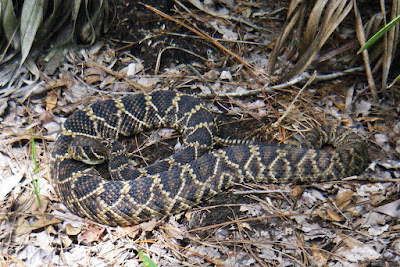
On the positive side of things, the abundance of recent fieldwork has resulted in several encounters with nature, and a slow starting Saturday has provided the opportunity to share one such wildlife sighting. However, before proceeding a warning must be forwarded; if you are lucky enough to stumble onto one of these herps in the wild, ensure that you’re stumbling is undertaken with the utmost caution – or your luck may run out very quickly! Although the below video and picture appear to be taken at close range, they in fact have been recorded at a distance and later edited from the safety of a desk.

Getting on with the tale (or, in this instance “tail”), while trudging through a chunk of palmetto flatwoods in north central Florida last week, a break in the radiating palmetto leaves underfoot caught my eye – a diamondback rattlesnake! And a big one at that!

Photo was taken by Charlie, a fellow ecologist that happens to be a little faster at drawing his camera.


The eastern diamondback rattlesnake Crotalus adamanteus is the largest pitviper in the Western Hemisphere and can achieve sizes (length) of more than seven feet. Fairly common here in Florida, their range extends north along the Atlantic seaboard to the Carolinas and westward to about New Orleans, Louisiana. They do well in habitats such as palmetto flatwoods due to the ample cover provided by the palmetto leaves (“palmetto” = Seronoa repens).

The leaves provide shade for regulating body temperatures, conceal them from fumbling ecologists, and offer excellent camouflage for setting ambushes – and setting ambushes is what they do best. They lay in wait for hours, motionless; then, when the radiating heat of an approaching rabbit, bird or other delicacy enters into range, OR when a savory molecule lands on the flicking tongue (vomeronasal organ or “Jacobson’s organ”), STRIKE!

Strike indeed! Strike with the largest fangs of any rattlesnake species and with a venom pact-full of proteins adapted to produce hemorrhaging and tissue necrosis.

Here's a quick video of the same specimen. He's on the move, so I paused the video a couple of seconds at the start; his head is near the upper right-hand corner - look for the curser.


Although the food capturing mode of Crotalus adamanteus can easily be described as “predatory,” their relative contribution, or “predatory influence,” within ecosystems is not especially clear. Typically, when viewing a system’s predator-prey functionality the response and feedback between prey availability (how many are present) is weighed against the number of predators acting antagonistically within the system.

For example, one question that could be posed in regards to the predator function of Crotalus is “how does a surge in rabbit numbers (prey) affect the longevity and reproductive success (population) of the eastern diamondback?” This may seem pretty much straight forward, however; the ability of reptiles to control or impact prey populations within a given environment may be somewhat different than those of endothermic predators; after all, the biology and physiology of ectotherms is considerably different – they posses a different metabolic scheme altogether.

In examination of predator function within the Viperidae (the Family to which the eastern diamondback is a member), Erika Nowak of the US Geological Survey and others concluded that in comparison to predator-prey models established for mammals, the ectothermic vipers contribute a lesser prey population regulating potential.

The reasons for the Viperidae’s decrease in predator functionality include:
1. Longer prey handling times due to a comparatively limited digestive capability
2. Increased tolerances for fasting
3. An increased ability to convert food into fitness currency (progeny)
4. A limited ability for rapid reproductive tracking of short-term prey abundance.

Their article (Functional and Numerical Responses of Predators: Where Do Vipers Fit in the Traditional Paradigms?) Strongly points to the need for additional research in several areas behavioral ecology. I fully agree with this assessment, but for whosoever takes on the task - watch your step!


Erika M. Nowak1, Tad C. Theimer, Gordon W. Schuett (2008). Functional and Numerical Responses of
Predators: Where Do Vipers Fit in the
Traditional Paradigms? Biological Reviews, 83 (4), 601-620

Saturday, June 6, 2009

Phagocytotic Predators from the Proterozoic?

ResearchBlogging.orgBy way of simulation, a recent addition to PLoS One’s Paleontology Collection examines the rise of predation as a feeding mechanism in unicellular organisms. Taking what I would describe as a theoretical perspective, the authors evaluate the question of predatory origins in the light of recognized ecological and life history traits exhibited by modern eukaryotes. Central to their argument is adherence to the following fundamental biologic and physical principles: Conservation of energy and matter, Surface to volume ratio, Power law of metabolism, Inheritance, Predation advantage, Size asymmetry, and Positional information.

Though I would agree with the paper’s authors in that a biologist might find it “…suspicious that there would be any period of time, however remote, that normal biological and ecological principles did not apply,” I would also emphasize that ecological and biological interactions tend to be constructed from compounding processes that develop with specific respect to time. And, when we examine deep geologic time it’s important to bear in mind that although the rules of the game remain constant, the players may have been substantially different – different in quantity, diversity, intra/inter-population density, etc…

These factors are absolutely crucial in the advent of any competitive strategies, rather they are for energy acquisition as in predator-prey relationships, or locomotion/movement tactics as methods for searching and dispersal. The question isn’t so much “did predation arise through the interplay of natural forces” – we’re fairly confident of that – instead the question is, “what is the duration and timeline associated with these processes?”

At this risk of sounding overly critical, I think that there may be a disconnect between the paper’s introductory assumption that predation arose in less than about 1–3 billion years, and the bulk of the paper’s data which argues that predation is the result of natural processes. Somewhere during the read, it seems to me, the perspective of time is lost...

It’s not unreasonable to suggest that at some point in deep geologic time there existed an "original" population of protozoans (or other unicellular critters), and that this population consisted of numerous, multiplying individuals whom expended energy. Due to the physical constraints of chemistry and the physiology of biological metabolism, generating energy requires the continual acquisition and consumption of resources from the surrounding environment. Unfortunately, the surrounding environment doesn’t possess unlimited resources, thus populations do not experience unbounded growth and reproductive autonomy - there are restrictions to population size.

As the population of protozoans reproduced and expanded, shortfalls in available resources would cause the population to undergo a “leveling out effect” (or rather, enter a state of oscillation) in which the number of individuals present would hover near the environment’s carrying capacity. At this point, the population either randomly fluctuates near this carrying capacity, while awaiting its inevitable demise at the hand of environmental change; or, the individuals in the system attempt to locate new, or alternative, resources through the mechanisms of natural selection.

In order for the population of protozoans to track down additional resources, they must either expand their range through greater exploration and dispersal; or, change in such a way as to enable the consumption of other, more prevalent resources – through predation or otherwise. Either of these options, range expansion or the processing of alternative foodstuffs, require morphological adaptation, the most basic of which is simply growing bigger.

Individual protozoa are far too small to be effective range expanders; therefore an increase in an individuals overall size (as well as propulsion) would be necessary to maximize travel efficiency. Likewise, in order to process new foodstuffs an organism must develop both a new means of acquisition (or gathering) and a new means of metabolizing the “foodstuffs” once they are found. To a certain degree, this implies a change in morphology and physiology – new parts and the metabolism to support those new parts are needed.

(NOTE: Perhaps a population can expand a range over multiple generations, but on my assessment adaptations “for the good of” a species or population don’t have as much explanatory torque; that’s another topic though - my point here is that individual protozoa would have some difficulty exploring the seas in search of palatable sustenance.)

As an organism grows bigger - increases its volume - it must do so while obeying certain physical and biological principles. For instance, any increase in total volume must be accompanied by a proportionately greater increase in available surface area. The surface of an organism is where energy absorption and environmental interaction occurs, consequently surface area must increase to permit inclusion of ample energy, to facilitate ecological interaction and to sustain the internal components. (For example, if an organism were spherical, volume would increase as the cube of the radius, whereas the surface area would only increase as the square of the radius; so, in order to maximize energy absorption the organism must either develop in an elongate fashion, or develop additional specialized structures such as appendages, trichomes, folded skin, etc.).

Such a drive to acquire resources may have enabled protozoa (or other unicellulars) to grow or adapt in a way as to permit phagocytotic predatation, but to the best of knowledge, that isn’t in doubt - what is uncertain is the timing of such events. How long did it take for the “original population” to reach a point of ecological pressure sufficient to drive a transition towards predation – how much TIME ???

To end on a positive note however; throughout the paper the authors emphasized the need for scientists studying the biologic systems of deep geologic time to account for established biologic and ecologic principles during their research – this point is clearly supported by the current paper and I think that it will be well received by most!

de Nooijer, S., Holland, B., & Penny, D. (2009). The Emergence of Predators in Early Life: There was No Garden of Eden PLoS ONE, 4 (6) DOI: 10.1371/journal.pone.0005507